Training and Careers
Equine Therapy Certification: Paths and Options
There is no single "equine therapy certificate." Whether you want to teach riding, facilitate learning, handle horses, or practice clinically, the path is different — here is how to find yours.
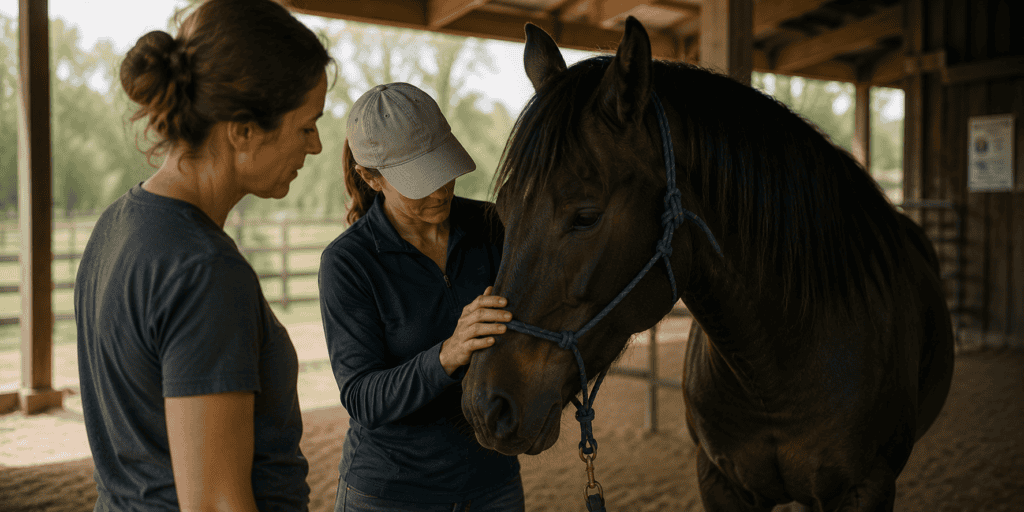
There is no single “equine therapy certification.” The field spans instruction, learning, horse handling, and clinical practice, and each area has its own credentials, organizations, and intended roles. Whether someone wants to teach adaptive riding, facilitate equine-assisted learning, specialize in the horse’s role, or practice clinically, the pathway — and the body that grants it — is different.
This guide maps the major certification pathways, what each represents, who pursues it, and how they fit into the broader landscape of equine-assisted activities and the roles within them.
What Certification Means and Why It Exists
In this field, certification is a structured training and evaluation process that helps professionals build consistent skills in horsemanship, program design, facilitation, or instruction. The various credentials share a purpose: setting clear, safe, organized expectations for working with horses. Importantly, certification is not the same as clinical licensure — it is a professional credential that supports quality and responsible practice within a particular type of program, not a license to provide medical treatment.
These programs emerged to unify standards, terminology, and role definitions across a broad and varied field. As more programs appeared — from riding instruction to experiential learning — organizations formalized training so that horses are handled appropriately, participants get well-structured experiences, and expectations stay consistent from region to region.
The Main Certification Pathways
Most credentials in the field fall into a few categories. They are not interchangeable — each has its own scope, requirements, and intended setting.
| Pathway | Who it is for | Example organizations |
|---|---|---|
| Adaptive / therapeutic riding instructor | Instructors teaching adaptive or inclusive riding | PATH International, CanTRA |
| Equine-assisted learning facilitator | Educators, coaches, and facilitators in non-clinical learning | E3A, EAHAE |
| Equine specialist | Professionals managing the horse’s role and welfare | PATH International (ESMHL) |
| Hippotherapy credential | Licensed PTs, OTs, and SLPs using equine movement clinically | American Hippotherapy Association / AHCB |
| Relational / horsemanship-based | Facilitators focused on groundwork and partnership | Various horsemanship-based programs |
Adaptive and Therapeutic Riding Instructor
Instructor certifications are among the most recognized in the field, preparing professionals to teach adaptive or inclusive riding for a wide range of rider needs. Organizations such as PATH International and CanTRA offer pathways with progressive skill levels, covering lesson planning, managing volunteers, selecting suitable horses, and adapting activities for individuals. They are commonly pursued by riding instructors, barn managers, and equine professionals; for a closer look, see our guides to the PATH Intl. CTRI certification and becoming an adaptive riding instructor.
Equine-Assisted Learning (EAL) Facilitator
EAL credentials center on using horses as partners in structured learning that supports skill development, team dynamics, and personal growth, with training in facilitation, program structure, and equine behavior in group or educational settings. Organizations such as E3A and EAHAE provide models for designing learning sessions, and these certifications are typically chosen by educators, coaches, and facilitators working in non-clinical environments.
Equine Specialist
Some certifications focus specifically on the horse’s role in a program. PATH International’s Equine Specialist credential (ESMHL) emphasizes equine handling, observation, welfare, and environmental readiness. These professionals complement instructors and facilitators by making sure the horse’s needs and responses are understood and thoughtfully integrated into each activity.
Hippotherapy Credentials
Hippotherapy — the use of equine movement by licensed healthcare professionals — has its own training pathway through the American Hippotherapy Association (AHA) and the American Hippotherapy Certification Board (AHCB). The credential itself is for clinicians who already hold a license: coursework covers equine movement, handling in a clinical context, and the structure of programs where hippotherapy occurs, and the therapist works within their own scope of practice. It is included here to show how a clinical sector of the field maintains its own credentialing, distinct from instructional ones; our beginner’s guide to hippotherapy training goes deeper.
Relational and Horsemanship-Based
Another branch emphasizes the relational and experiential side of working with horses — groundwork, communication, and partnership — often drawing on natural horsemanship or experiential learning theory. These programs use horses to support insight and connection in non-clinical settings, and training tends to stress equine communication, observation, and ethical, responsive handling.
What to Expect from Training
Programs differ, but most blend foundational instruction in equine behavior and handling, program design or facilitation methods, ethical guidelines, observation and communication skills, hands-on skill assessments, and ongoing continuing education for renewal. Some require prior horse experience; others teach horsemanship from the ground up.
Formats and timelines vary just as widely — from multi-day intensives to longer coursework, mentorship, or progressive evaluations — with online components increasingly common for the introductory stages. Costs vary too, and typically include tuition or course fees, membership, evaluation or examination fees, travel for in-person components, and continuing education for renewal. Because certification often unfolds in stages, many organizations publish clear breakdowns so trainees can plan ahead.
Where Certified Professionals Work
Certified professionals work across many settings — adaptive riding programs, equine-assisted learning facilities, nonprofit equestrian centers, educational and youth programs, experiential learning environments, and private barns that host workshops or events. The range of pathways lets trainees align their credential with the kind of program they want to join.
How the Pathways Fit Together
Because the field holds many distinct areas, certifications are not interchangeable: instructor credentials, learning-facilitator credentials, equine-specialist credentials, and clinical training each carry their own scope and intended setting. Understanding those differences is the key to choosing training that matches the specific work you plan to do. If a credential name or acronym is unfamiliar, the glossary defines the common ones.
Final Thoughts
Equine-related certifications offer structured pathways for people who want to teach adaptive riding, facilitate learning, specialize in the horse’s role, or bring equine work into clinical practice. Each has its own purpose and focus, reflecting the diversity of the field, and together they provide the shared reference points that keep work with horses responsible and well-prepared. The right starting point depends on the role you are aiming for — so it is worth matching the credential to the setting you want to work in before committing to a program.