
Adaptive Riding vs Therapeutic Riding: Key Differences Explained
Learn the difference between adaptive riding and therapeutic riding, including goals, structure, and how to choose the right program.
On this page
Adaptive riding and therapeutic riding are closely related and often overlap, but they are not quite the same thing. Adaptive riding is about access — modifying horseback riding so people with disabilities or other challenges can take part safely and comfortably. Therapeutic riding is about outcomes — using the riding lesson as a structured way to work toward physical, cognitive, emotional, or social goals.
In everyday use the two terms get swapped freely, and in practice many programs blend both. Knowing which emphasis a program leans toward mainly helps you set the right expectations and ask better questions before you enroll.
What Is Adaptive Riding?
Adaptive riding is horseback riding that has been modified so a wider range of people can participate. The goal is to fit the experience to the rider rather than the other way around.
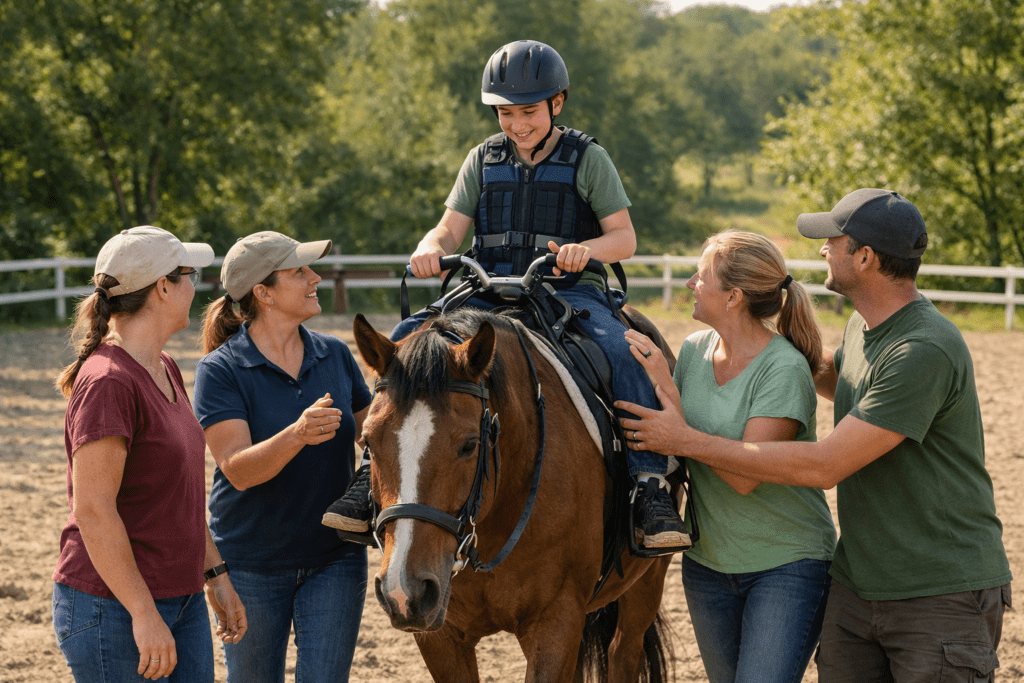
In practice that can mean specialized tack, a slower or simplified pace of instruction, physical support during mounting and riding, or lessons shaped around the rider’s strengths and needs. The emphasis is usually on inclusion, participation, and enjoyment — though riders still build real skills along the way, often improving balance, coordination, confidence, and independence simply by riding in a setting designed with them in mind.
What Is Therapeutic Riding?
Therapeutic riding uses horseback riding in a more structured, goal-oriented way. Sessions are built not only to teach riding but to support development in areas like motor skills, focus, confidence, communication, and emotional regulation.
Activities are usually planned with specific outcomes in mind — a rider might work on posture, balance, following directions, social interaction, or managing frustration, all within the lesson. The horse is not just part of the experience; it is part of the process. That makes therapeutic riding a strong fit for riders who benefit from consistency, guided progression, and a program intentionally built around growth rather than recreation alone.
Adaptive Riding vs. Therapeutic Riding at a Glance
The clearest way to hold the two apart is that adaptive riding is about accommodation, while therapeutic riding is about intention. This table lays out how that plays out in practice.
| Adaptive riding | Therapeutic riding | |
|---|---|---|
| Primary focus | Access and participation | Goals and measurable progress |
| Core question | “How do we make riding possible?” | “How do we use riding to support growth?” |
| Emphasis | Inclusion, enjoyment, riding skills | Physical, cognitive, emotional, and social development |
| Typical structure | Modified lessons with supports as needed | Planned sessions built around specific outcomes |
| Best when you want | A welcoming, accessible way to ride | A structured program targeting specific goals |
Where They Overlap
In real programs, the two usually sit side by side. A rider might use adapted equipment and side-walker support to make participation possible, while the session itself is shaped around balance, coordination, and confidence goals. The adaptive element makes riding accessible; the therapeutic element gives it direction.
It is also worth knowing that the field’s main credentialing body, PATH Intl., treats the two terms as largely interchangeable — it certifies a single “Therapeutic/Adaptive Riding” instructor credential rather than two separate ones. So the access-versus-goals distinction is best understood as a difference in a program’s emphasis, not an official dividing line.1
How to Choose the Right Program
If you mainly want a welcoming, well-supported way to get in the saddle — with inclusion, enjoyment, and basic riding participation as the goal — an adaptive-leaning program is likely the better fit. If you are looking for a structured experience built around specific physical, emotional, cognitive, or social goals over time, a therapeutic-leaning program is usually the stronger match.
Often the best center offers both: adaptive support so the rider can take part, plus purposeful, consistent sessions that build toward something. Because the labels vary from center to center, the most useful thing you can do is ask directly — is this program primarily about access, about goals, or a blend? You can find a program near you in our directory and contact centers to ask exactly that.
Final Thoughts
Adaptive riding and therapeutic riding are closely connected, and the best programs draw from both. Adaptive riding removes barriers so more people can participate; therapeutic riding adds structure and purpose so that participation can support broader goals.
The difference is not always obvious from the rail, but it matters when you are trying to understand what a program is designed to do. Once that is clear, choosing the right fit becomes much easier.
SOURCES
- PATH Intl. (Professional Association of Therapeutic Horsemanship International). Is It Adaptive Riding or Therapeutic Riding? pathintl.org
This guide is for general information and isn’t medical or mental-health advice. Talk with a qualified provider about your own situation.