
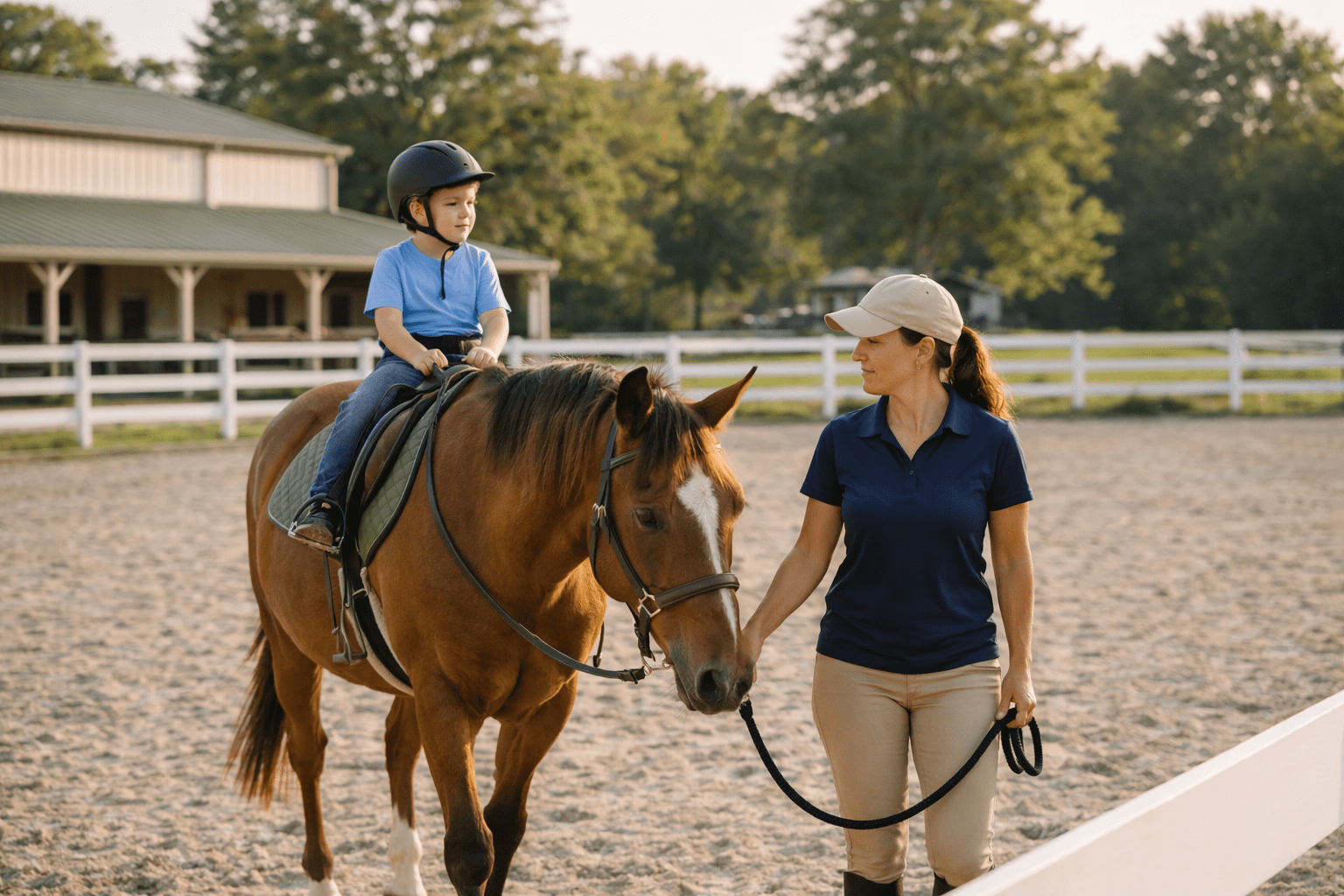
Some kids open up around a horse in ways they never do in a clinic or classroom. Here’s how equine therapy for children works — and how to find the type that fits yours.
Plain-language guides for families, caregivers and riders: what programs offer, what the evidence says and what to ask a center.
When a clinic or classroom isn’t clicking.
Honest feedback from a 1,200-pound partner.
No rank, no past, just attention.
Balance, confidence and connection.
A place to build balance and focus.
Some kids open up around a horse in ways they never do in a clinic or classroom. Here’s how equine therapy for children works — and how to find the type that fits yours.
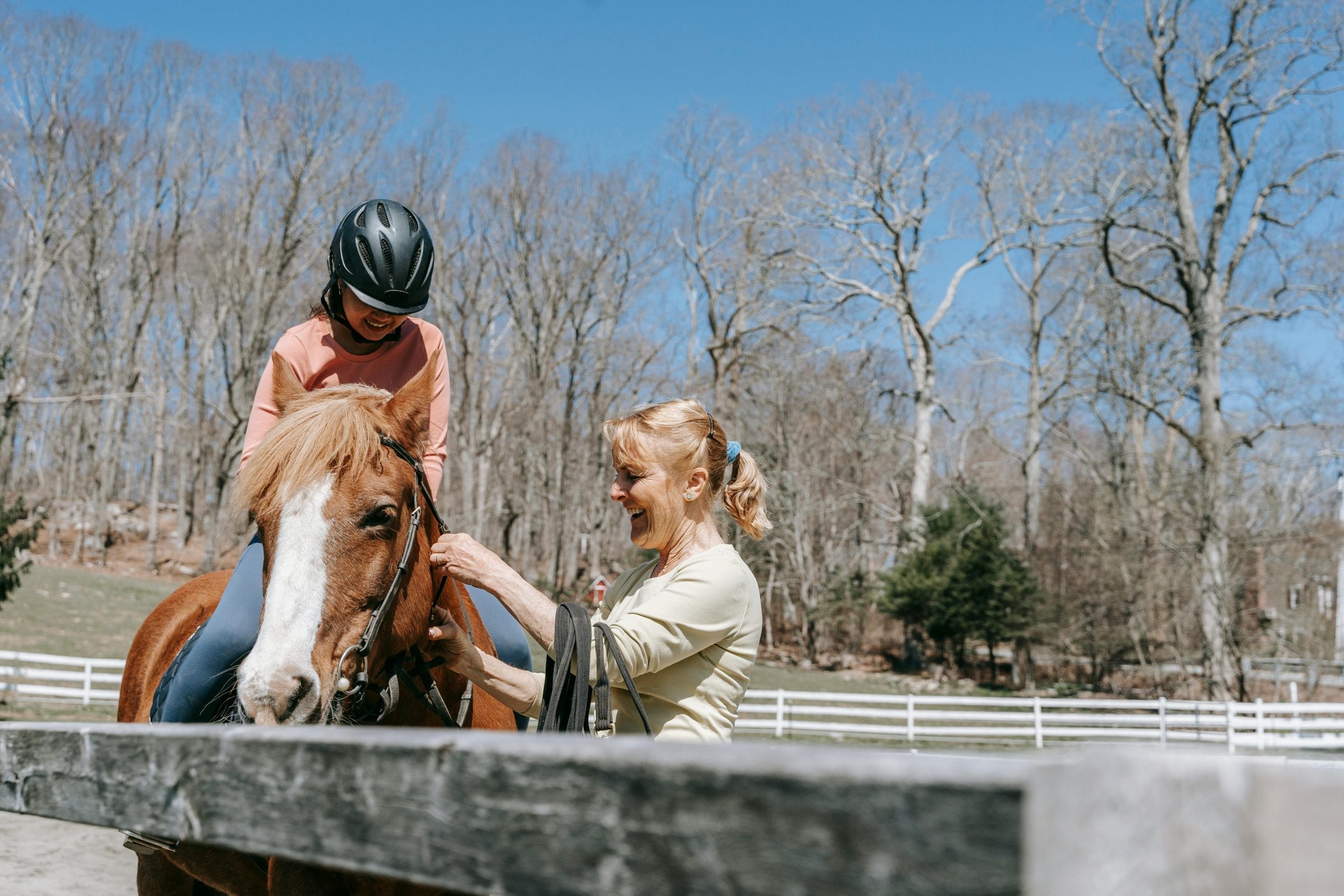
In the clinic it is balance practice. On a horse, it is a turn taken sitting tall while reaching for a target. For many children with special needs, that shift is what makes the work stick.

Horses do not care about labels. For children and adults with disabilities, a barn can become a place to build balance, focus, and confidence, one steady session at a time.

A horse doesn’t care about your reputation, your grades, or last week’s group-chat drama — it responds to who you are right now. For a lot of teens, that honesty is exactly what lands.

Aging changes how the body moves and connects. Here’s how time with horses can rebuild balance, confidence, and a sense of purpose — safely, and at an unhurried pace.

For many veterans, the barn asks nothing about rank or the past — just your attention, right now. Here’s how equine programs for veterans actually work, and how to find one.

Behind every calm session is a structure built for predictability. Here’s how inclusive equine programs are organized — the routines, activities, and small steps that help children take part.