Who It Helps
Equine Programs for Older Adults: Balance, Confidence, and Connection
Aging changes how the body moves and connects. Here's how time with horses can rebuild balance, confidence, and a sense of purpose — safely, and at an unhurried pace.
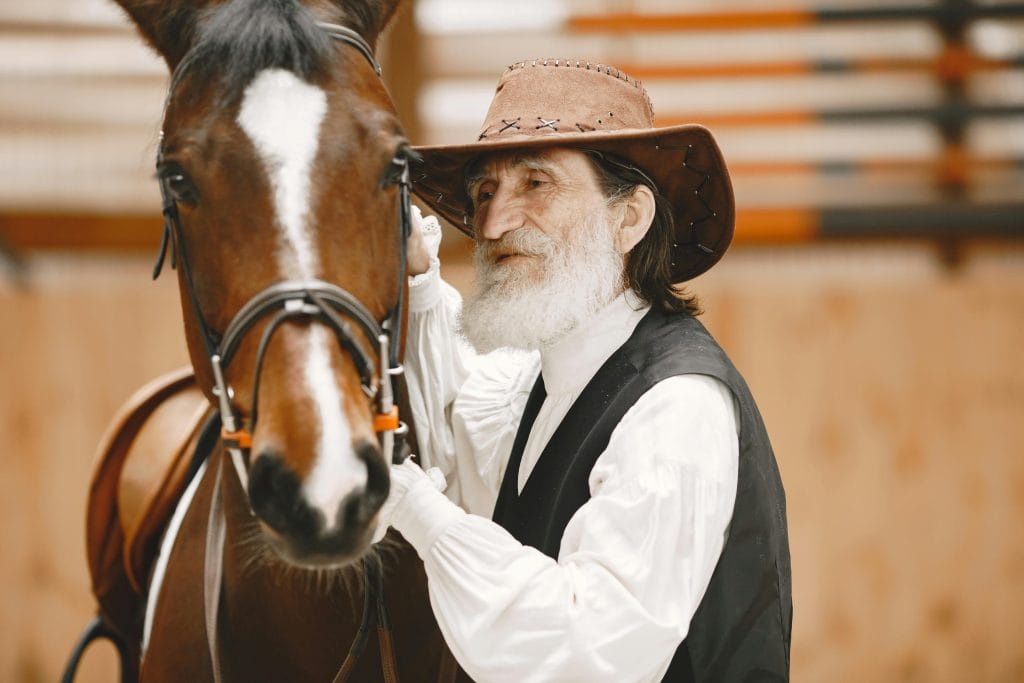
Equine therapy for older adults is a calm, adaptable way to work on balance, posture, confidence, and connection through structured time with horses — mounted when it’s appropriate, and through groundwork like grooming and leading when it isn’t. Rather than a clinical regimen, it’s a purposeful activity that lets older adults practice meaningful physical and cognitive skills in a setting that feels welcoming rather than medical.
For many people, that combination is the draw: real challenge without the atmosphere of a clinic, and steady, honest feedback from a partner who responds to how they move and breathe. This guide explains why horses can be especially well-suited to later life, what sessions look like, how programs keep participants safe, and what the research does — and doesn’t yet — show.
Why Equine Therapy Helps Later in Life
Aging gradually changes how the body moves, responds, and recovers. Strength can decline, balance may take more conscious effort, and social circles often narrow as routines shrink. Many older adults go looking for activities that feel meaningful rather than clinical — and time with horses offers exactly that.
Horses respond directly to small shifts in breathing, posture, and spacing. When a cue is rushed or uncertain, a horse hesitates; when the person steadies, aligns, or breathes more intentionally, the horse settles in response. That immediate, gentle feedback helps older adults feel how their bodies communicate — an experience that becomes especially valuable as mobility and confidence fluctuate with age. The horse isn’t judging; it’s simply reflecting, and that honesty is something many participants find both motivating and reassuring.
How Horses Support Physical Confidence
Equine-assisted work offers physical benefits that develop gradually and realistically. For those who ride, the horse’s rhythmic walk draws the trunk and hip muscles into continuous, low-impact engagement as the body organizes itself to stay balanced — which over time can support postural endurance, smoother weight shift, and better awareness of one’s center. This kind of balance and postural training is where the broader research on horseback-riding interventions is strongest, though most of that work has studied younger or neurological populations rather than healthy older adults specifically.1
When mounted work isn’t appropriate, groundwork still provides real physical engagement. Grooming, leading, and walking patterns challenge alignment, stride consistency, safe turning, and controlled pacing — and because attention shifts outward toward the horse, people often move more naturally and self-consciously less. Consider an older adult who has started avoiding narrow grocery aisles because of balance worries. Leading a steady mare through a gentle S-curve, their first steps are short and rushed and the mare hesitates; after practicing a longer stride and looking through the turn, the pair move together smoothly. A week later, that same cue — look ahead, lengthen the step — helps the person move through the store without freezing. The barn didn’t remove the challenge; it made practice safe, purposeful, and transferable.
For older adults living with stiffness or chronic discomfort, the mix of gentle motion, focused breathing, and purposeful activity often eases guarding and restores a sense of physical ease.
Cognitive and Emotional Engagement
The barn naturally invites attention and adaptability. Remembering a grooming sequence or navigating a pattern beside a horse draws on working memory and planning, while responding to the horse’s pace and posture exercises flexibility and awareness of the surroundings.
Emotionally, progress is built through believable moments — a smooth halt, a patient turn, a coordinated walk — that lift confidence precisely because they’re earned. Horses don’t evaluate or criticize; their calm, consistent responses create an atmosphere that supports self-regulation, can ease anxiety, and reinforces a sense of competence at a stage of life when that feeling can be hard to come by.
Social Participation and Purpose
Beyond the bond with the horse, equine programs offer community. Volunteers, instructors, families, and participants form a network where each person contributes to the rhythm of the session. Older adults who feel sidelined elsewhere often rediscover a sense of purpose here — greeting the horse, choosing the day’s tasks, noticing their own progress, and taking part in predictable routines that reinforce both connection and identity.
Safety, Screening, and Individual Fit
A high-quality program begins with a thorough conversation about health history, mobility, endurance, vision, hearing, medication effects, bone density, and fall risk. The goal isn’t to rule people out — it’s to find the safest, most beneficial path for each person.
Some conditions make mounted work unsuitable, such as severe osteoporosis, an unstable spine, or uncontrolled medical concerns — but groundwork and carriage-driving alternatives can still offer rich engagement. Adaptations are routine and expected: mounting ramps or lifts, fitted helmets, supportive surcingles or grab straps, safe footing, seating at grooming stations, simple visual cues, and pacing that respects energy levels. The environment is kept calm, predictable, and structured to reduce overwhelm while preserving a meaningful challenge. A participant’s own physician or care team is the right partner in deciding whether mounted work is appropriate.
Who Leads Which Type of Session
Who runs a session depends on its goals, and a reputable center will explain this clearly rather than blurring the lines.
- Hippotherapy is delivered by licensed physical, occupational, or speech-language therapists when clinical goals — balance, posture, breath coordination, speech clarity — are involved.
- Adaptive riding is taught by certified instructors and centers on riding skills, enjoyment, and confidence rather than medical treatment.
- Equine-assisted learning and equine-assisted psychotherapy address communication, problem-solving, or emotional regulation, and are facilitated by trained practitioners or licensed mental-health clinicians.
The distinction matters most when a program is described in clinical terms: only the therapist-led services are clinical care, and a good center will say plainly who leads each session, what their credentials mean, and how progress is observed.
What a Session Typically Looks Like
A predictable structure helps older adults feel steady and confident. Sessions usually open with a brief review of the plan — practicing tall posture through two large circles, say, or leading through an S-curve without rushing. The main activity follows at a comfortable pace: mounted work focuses on a steady walk, soft corners, and unhurried transitions, while groundwork emphasizes safe spacing, timing, and smooth turns. A cool-down slows the tempo and revisits a familiar alignment cue, and the facilitator helps the participant carry one simple strategy home — something like “pause, breathe, then step” or “eyes up before turning.” A consistent goodbye routine closes the session and helps the day’s learning settle.
Coordinating With Families and Care Teams
Carryover improves when everyone uses the same language across settings. Short, memorable phrases — “tall, then step,” “space, then speak,” “pause, breathe, turn” — let an older adult reach for the same strategy in the kitchen, on the stairs, or in a crowded aisle. Occasional communication between barn staff and a person’s healthcare team supports consistency and helps everyone notice subtle changes over time.
What the Research Suggests
It’s worth being honest about the evidence here. Research on equine-assisted activities specifically in older adults is still limited, and many of the strongest studies on balance and postural control come from other populations, so extrapolating to healthy aging calls for some caution.1 Where older adults have been studied directly — for example, in pilot work with people living with dementia — equine-assisted programs have shown promising signs, such as increased positive engagement and reduced agitation, though samples are small and more research is needed.2
The practical takeaway: the physical, cognitive, and social benefits described above are real and frequently observed, but they’re best understood as the gains of a thoughtfully designed activity rather than guaranteed clinical outcomes. Approached that way — with realistic expectations and proper screening — equine therapy can be a genuinely worthwhile part of an older adult’s week.
A Complement, Not a Replacement
Equine therapy for older adults works best alongside — not in place of — the medical care, physical therapy, and support a person already relies on. It doesn’t turn back time or substitute for a fall-prevention plan, a physician’s guidance, or prescribed rehabilitation. What it offers is something more grounded: meaningful practice, renewed confidence, and connection with a responsive partner, woven into the broader care an older adult already has in place. A quality program will see itself that way too, and will welcome contact with a participant’s clinicians.
Finding a Program
A single visit reveals a great deal. Look for calm, well-cared-for horses, clean and well-fitted tack, organized mounting areas, and staff who coach with patience rather than urgency. Ask how sessions are adapted for stamina or joint concerns, how horse welfare is protected, who leads each type of session, and how progress will be reviewed — clear, confident answers are themselves part of safety.
When you’re ready to look, you can find a program near you or browse centers by state.
SOURCES
- Stergiou A, Tzoufi M, Ntzani E, et al. Therapeutic effects of horseback riding interventions: a systematic review and meta-analysis. American Journal of Physical Medicine & Rehabilitation, 2017. (Balance and postural-control outcomes; study populations skew younger and neurological — extrapolation to older adults is cautious.)
- Dabelko-Schoeny H, Phillips G, Darrough E, et al. Equine-assisted intervention for people with dementia. Anthrozoös, 2014.