
What to Expect at a Riding Session
The first visit can feel like stepping into a different rhythm — slower, quieter, unfamiliar. Here is exactly how a riding session unfolds, from the moment you arrive to the last pat goodbye.
On this page
A therapeutic riding session is a calm, structured experience that usually moves through the same steps: arriving and settling in, meeting the team, grooming the horse, tacking up and mounting with support, riding in the arena, and cooling down before a quiet goodbye. Every program has its own style, but the routine is predictable by design — that predictability is what helps new riders feel comfortable, confident, and safe.
If you have never visited a riding center, knowing how a session flows takes most of the uncertainty out of the first visit, for the rider and for the family watching. Here is what to expect, start to finish. If any barn words are new along the way, the equine therapy glossary is a quick reference.
A Session at a Glance
Most sessions follow roughly this order:
- Arrive a few minutes early and settle into the quiet of the barn.
- Meet the instructor and volunteers — the leader who guides the horse, and the side walkers who support the rider.
- Groom the horse and do a little light horsemanship to build a bond.
- Tack up and mount, usually with a block, ramp, or lift and a steady team.
- Ride in the arena: posture, balance, simple cues, and gentle patterns.
- Cool down with a slow walk, then dismount with the same support.
- Spend a quiet moment with the horse before saying goodbye.
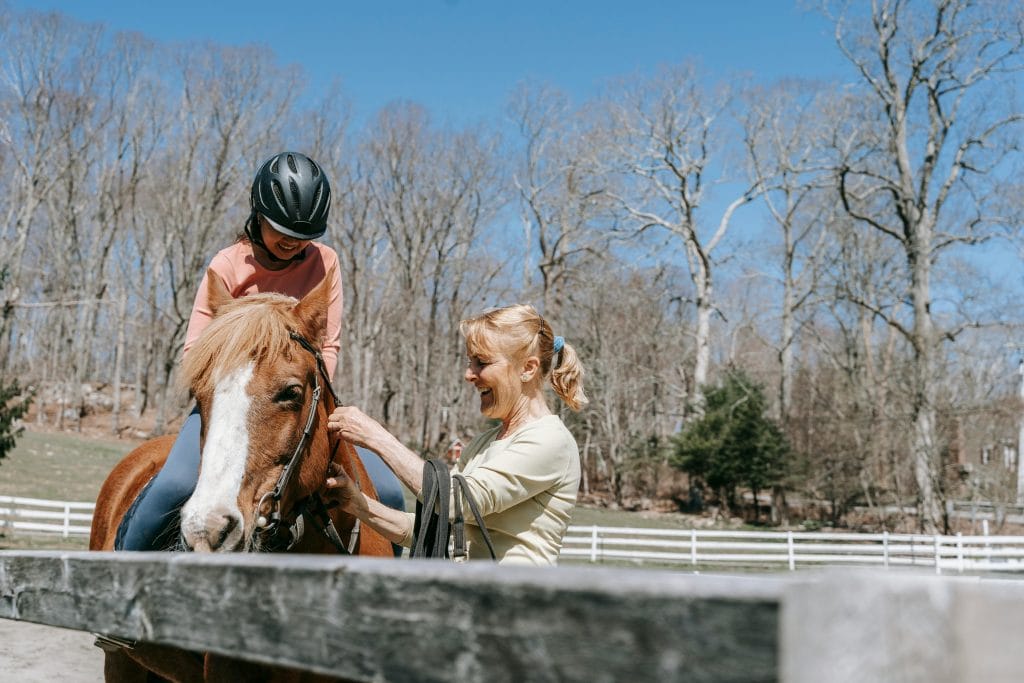
Arriving and Settling In
A visit really begins the moment you pull into the driveway — the sound of hooves in the arena, the scent of hay, the sight of open fields or a tidy barn. Many centers ask riders to arrive a few minutes early so they can transition into the setting without feeling rushed, taking a moment to breathe, settle, and start noticing the horses.
Horses move, behave, and communicate differently from most animals we meet day to day, and a few unhurried minutes makes that first contact feel natural rather than overwhelming.
Meeting the Instructor, Volunteers, and Horse
When the session starts, riders meet their instructor and any volunteers supporting them. In most programs, volunteers serve as leaders or side walkers: leaders guide the horse from the ground, while side walkers offer support to the rider as needed. Meeting the team early builds trust and helps riders feel at ease with the people assisting them.
Before mounting, many programs begin with grooming or light horsemanship. Grooming is more than a chore — brushing the coat, working through the mane, or helping pick out hooves under supervision is a simple, powerful way to bond. The repetitive motions tend to be soothing, and the horse's calm presence helps riders feel grounded before they get on.
Tacking Up and Mounting
Once grooming is done, the instructor fits the horse with the appropriate tack — saddle, pad, bridle, and any adaptive equipment the rider needs. This prep time is a good chance to watch, ask questions, and learn what each piece does.
Mounting is one of the most carefully supported moments of the session. Many centers use a mounting block or ramp to make it easier and more accessible, and some have a lift for riders who need more support. The instructor and volunteers work as a team so the process feels steady and predictable, and riders are encouraged to relax, breathe, and find their balance as they settle into the saddle. Notably, riders are supported but never strapped to the horse — safe support, not restraint.
The Ride
Once mounted, the arena becomes a quiet world of its own: hooves, soft voices, gentle reminders. Riders often spend the first few minutes adjusting posture, feeling the horse's movement, and getting comfortable. Even a slow walk can feel new and exciting, and the horse's rhythmic motion helps the rider find a natural sense of balance.
From there, riders learn to communicate with the horse through simple cues — stopping, starting, steering, easing into a turn — using verbal, visual, or physical prompts depending on what works best. Because horses are sensitive, even small shifts in posture or tone change how they respond, which quietly builds body awareness. As the session goes on, riders may follow arena patterns or playful tasks like dropping rings in a bucket, weaving through cones, or steering toward colorful markers — low-pressure activities that build coordination and focus. Some programs progress step by step toward new skills, while others stay relaxed and prioritize enjoyment; either way, the pace follows the rider's goals and comfort, and the atmosphere is rarely rushed.
Cooling Down and Saying Goodbye
As the session winds down, riders help cool the horse with a slower walk around the arena, which lets the horse settle and eases the rider out of the structured part of the lesson. When it is time to dismount, the instructor and volunteers assist with the same care as during mounting.
Afterward, many riders enjoy a moment of connection before leaving — a pat, helping untack, or simply standing quietly with the horse. These small closing rituals leave riders with a sense of accomplishment, and caregivers often notice the smiles, calm, or quiet pride as the session ends.
Final Thoughts
Every center is a little different, but they share a commitment to safety, encouragement, and the well-being of both horse and rider. Knowing how a session unfolds lets families and participants arrive with confidence rather than nerves. Whether the goal is building skills, balance, and confidence or simply enjoying time with horses, a riding session offers a warm, steady place for that to happen.
When you are ready, our guide to choosing an equine therapy center can help you find the right fit, and you can browse centers by state in our directory.
This guide is for general information and isn’t medical or mental-health advice. Talk with a qualified provider about your own situation.