
How to Become an Adaptive Riding Instructor
It is teaching, not therapy — opening the barn to riders who would otherwise be left out. If you have horse sense, patience, and the urge to teach, here is the path to becoming certified.
On this page
An adaptive riding instructor teaches riding and horsemanship in ways that respect each rider's sensory, physical, cognitive, or emotional needs — opening the barn to people who might otherwise be left out of traditional programs. The work is instructional, not clinical: it builds confidence, participation, communication, and independence through horse-centered lessons, rather than providing therapy. If you have a solid foundation in horsemanship, patience with diverse learners, and a genuine desire to teach, it can be a strong fit.
This guide walks the path from entry requirements and skills through certification and first steps. For the wider view of credentials in the field, see our overview of equine therapy certification.
What Adaptive Riding Instructors Do
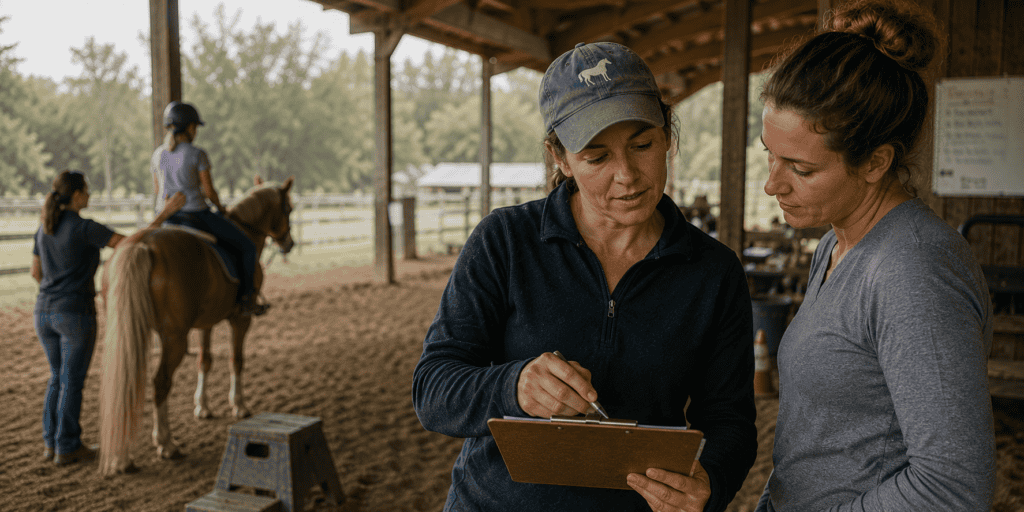
Instructors teach mounted and unmounted horsemanship matched to each rider's ability and learning style. In practice, that means assessing how a rider communicates, learns, and moves, then adapting tasks and choosing the horses, tack, and lesson formats that set them up to succeed. A session might involve grooming with visual cues, practicing safe leading, or riding a simple pattern at the walk with side walker support. The aim is participation and skill-building, not medical outcomes.
Good instructors notice the small shifts — a steadier posture, clearer communication, a braver reach for the reins — and build lessons around them. They also coach volunteers, coordinate with families, and keep the environment safe for people and horses. Because the work is instructional rather than clinical, instructors do not provide therapy; instead they collaborate with families or clinicians to stay aligned with a rider's broader goals while keeping sessions firmly in the education and recreation sphere.
Skills That Help Before You Train
Most people arrive with a mix of horse experience and a desire to teach. The strongest candidates tend to share a few qualities:
Solid horse handling and riding. You should be able to tack safely, lead confidently in varied environments, and ride well enough to demonstrate the walk, trot, and basic figures a given certification expects.
Clear, patient communication. Many adaptive riders process instructions best when they are short, predictable, and paired with demonstrations or visual cues, so instructors need to switch communication styles easily.
Observation and adaptability. This means reading a rider's posture, attention, and comfort and adjusting on the spot — and reading the horse too, choosing the right partner and knowing when it needs a break.
Safety awareness and a calm presence. Safety is foundational, so you must be comfortable directing volunteers, managing spacing, and responding to changes without raising the pressure in the arena.
An interest in learning about disability. Prior experience helps but is not required; curiosity, openness, and respect are what matter. You do not need a disability-studies background or teaching credentials to start — much of this is developed during formal training — but basic comfort with horses and a desire to teach smooth the learning curve.
Certification Pathways
If your goal is a credential recognized across the field, the two best known come from PATH International in the US and CanTRA in Canada. Both blend coursework, supervised teaching hours, riding assessment, and written or practical exams.
| Credential | Region | Typical requirements |
|---|---|---|
| PATH Intl. CTRI | US and international | Minimum age, supervised teaching hours, coursework in safety, disabilities, and equine management, a riding skills assessment, and a written exam |
| CanTRA Instructor (Basic to Advanced) | Canada | Demonstrated horsemanship, approved clinics or workshops, supervised teaching hours, knowledge of disabilities and adaptive equipment, plus practical and written evaluations |
The PATH International Certified Therapeutic Riding Instructor (CTRI) is an entry-level credential focused on safety, lesson planning, and adaptive teaching, preparing instructors to lead mounted lessons and some groundwork with volunteers; our CTRI certification guide covers it in depth. CanTRA offers a progressive series from Basic to Advanced and also accredits centers, so instructors often train within an accredited program that follows national standards for safety and horse welfare.
Several non-certification trainings can strengthen your practice too, including equine-assisted learning facilitator courses, trauma-informed horsemanship workshops, continuing education in behavior or motor learning, and volunteer mentoring at established centers. Each deepens your sense of how people learn and how horses respond.
What Training Looks Like
Becoming an instructor is less about passing exams than about learning to teach in a dynamic setting where horse, rider, and volunteers each bring different needs.
Most pathways move through the same arc: you shadow many instructors to see how varied riders communicate, then assist with classes as a side walker or horse leader so you learn safety and volunteer roles from the ground up.
From there, you teach under supervision — warm-ups, then short activities, then full lessons — while a mentor supports you, and you study safety and precautions (helmets, mounting procedures, adaptive tack, risk management), practice clear riding demonstrations, and learn practical strategies for supporting different sensory, cognitive, and motor needs.
The curve is steady rather than steep, built over months of real-world experience.
A Day in the Job
Certified instructors wear many hats. A typical day might include reviewing rider goals and planning activities, selecting suitable horses and tack, greeting families and orienting volunteers, leading a warm-up on the ground or in the saddle, supporting riders through patterns, transitions, or grooming, debriefing with families and noting progress, and checking on horses, equipment, and arena safety.
The work is hands-on, relational, and community-driven — and many instructors say the best part is watching a rider gain communication, independence, or confidence in real time.
Is This Career Right for You?
It may suit you if you are drawn to teaching skills rather than providing clinical care, to partnering with horses in a way that honors their welfare, and to helping children or adults take part more fully in recreation and community life.
It rewards patience, an eye for small wins, and comfort in settings where safety and clarity matter. The role is both rewarding and demanding, and the most successful instructors are steady, curious, and committed to ongoing learning.
How to Get Started
A good first move is to visit a local adaptive riding center — ask questions, volunteer, and observe lessons to see which parts of teaching resonate. From there:
- Review the certification requirements for PATH International or CanTRA.
- Start logging volunteer or assistant hours.
- Take introductory workshops or online coursework.
- Find a mentor instructor willing to guide your progress.
- Set a realistic timeline for the certification process.
Even if you are still unsure, volunteering is a low-pressure way to explore the field and build the foundational skills the rest of the path depends on.
Final Thoughts
Becoming an adaptive riding instructor is a process of learning to teach clearly, partner with horses ethically, and create an environment where riders of all abilities can take part with confidence.
It blends horsemanship, education, and disability awareness into a role with lasting impact — and with the right training, mentorship, and steady practice, you can build a career rooted in safety, partnership, and meaningful progress. To find centers where you might volunteer or train, you can browse by state in our directory.
This guide is for general information and isn’t medical or mental-health advice. Talk with a qualified provider about your own situation.