
PATH Intl. CTRI Certification: Requirements and Steps
The CTRI is not a weekend course. It asks for real teaching hours, two exams, and often up to two years of barn time. Here is exactly what the credential requires — and how to prepare for it.
On this page
The PATH Intl. Certified Therapeutic Riding Instructor (CTRI) is the entry-level credential for teaching adaptive and therapeutic riding to people with disabilities.
It is voluntary, but for many barns it is the minimum requirement to teach independently, and it signals that an instructor can keep riders and horses safe while adapting lessons thoughtfully. A CTRI is a skilled riding instructor, not a therapist, and provides instruction rather than clinical services. This guide lays out exactly what the credential requires and how to prepare for it.
The CTRI is one common route to becoming an adaptive riding instructor; for how it sits alongside other credentials, see our overview of equine therapy certification.
CTRI Requirements at a Glance
To qualify for the CTRI exam, candidates generally need to meet the following. Because PATH International updates its requirements periodically, always confirm the current details directly with PATH Intl. before you plan.
| Requirement | What it involves |
|---|---|
| Age | At least 18 years old |
| CPR and First Aid | Current certification in Adult and Child CPR and First Aid |
| Teaching hours | 25 hours teaching mounted therapeutic riding lessons, supervised by a PATH Intl. Certified Professional (only actual mounted teaching counts, and hours must be within the last two years) |
| Skills evidence | Documented equine handling, equine management, and experience working with people with disabilities |
| Standards Exam | Pass PATH Intl.'s Standards Exam as part of the application |
| Certification Exam | Pass the written CTRI exam at a Pearson VUE testing center |
| Emergency skills | Demonstrate emergency response, including an emergency dismount, plus tack checks during a lesson |
The Certification Process, Step by Step
The path is structured but flexible, and it usually unfolds in this order:
- Confirm the basics — that you are 18 or older and hold current Adult and Child CPR and First Aid certification.
- Build the experience: log your 25 supervised mounted teaching hours under a PATH Intl. Certified Professional, alongside the horsemanship and disability experience you will document.
- Submit your application with that documentation. The fee is paid in advance, and you should allow roughly 60 days for review.
- Pass the Standards Exam, which is part of the application process.
- Once you receive your authorization to test, schedule and sit the written CTRI exam at a Pearson VUE center. Testing has been year-round since 2025, and you should expect to test a minimum of about 90 days after applying.
- Maintain the credential afterward through continuing education.
On cost and timeline: application fees start in the range of $250 and vary depending on whether you are a PATH Intl. member, with additional costs for the exam, CPR and First Aid certification, and any training or travel.
Start to finish, the process can take up to about two years, mostly depending on how quickly you accumulate teaching hours and confidence. The written exam is a real hurdle, not a formality — recent pass rates have run roughly two-thirds to three-quarters of candidates — so preparation matters.
Who the CTRI Is For
People reach the CTRI from many starting points. Some are lifelong equestrians who want to teach inclusively; others are already riding instructors seeking a formal adaptive credential; and many come from education, youth work, recreation, or program management and want to pair their teaching strengths with deeper horse and safety knowledge.
A smaller number come from healthcare or therapy backgrounds and pursue the CTRI as a complement to separate clinical work. No single path is typical — what matters is the desire to work safely, respectfully, and collaboratively with riders and horses.
How to Prepare
Strong horsemanship is the bedrock, and it means more than riding well: reading equine body language, handling horses with clarity and kindness, and creating an environment where horses feel safe enough to respond consistently. Many candidates spend months or years in daily barn routines — grooming, tacking, leading, warming up and cooling down — before testing, because adaptive programs depend on calm, predictable handling. Watching how different horses respond to different riders also builds an intuitive sense of horse–rider pairing that feeds into lesson planning later.
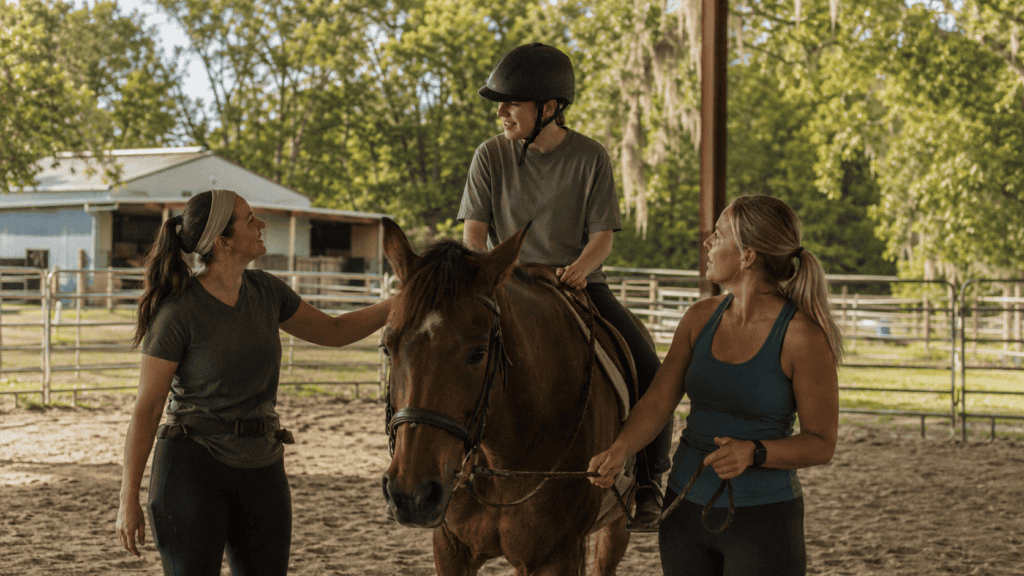
The most valuable preparation happens in real lessons. Assisting at a PATH Intl. center as a side walker or horse leader teaches you the arc of a session — greeting the rider, preparing the horse, mounting with support, warming up, practicing skills, completing patterns, cooling down, and a closing routine — and that predictability is what reduces anxiety and supports communication. Assisting also teaches you to direct volunteers gracefully when a lesson shifts unexpectedly.
Teaching itself is a craft worth rehearsing. Effective instructors use short, concrete cues riders can act on immediately — "tall body," "eyes up," "turn your belly button" — rather than long explanations, and they learn to pace a lesson, noticing when to pause, reset, or change gears for the rider, the horse, or the volunteers. It also helps to walk through real-world scenarios with a mentor: what to do if a rider leans heavily to one side, or a horse's walk turns quick and choppy mid-pattern. Talking through those decisions ahead of time makes real lessons feel far less unpredictable. Throughout, the candidates who succeed tend to share a steady presence — patient under uncertainty, clear rather than loud, quick to adjust, and respectful of both human and equine boundaries.
Choosing Where to Train
Training settings vary, from large PATH Intl. Premier Accredited Centers with formal mentorship to smaller centers offering hands-on guidance from experienced instructors. Either can be excellent when the culture is calm, safe, and respectful. On a visit, watch the horses — relaxed eyes, soft steps, and consistent behavior point to good welfare — and notice how instructors speak to riders and volunteers, since tone matters as much as technique. Smooth lesson transitions and well-organized volunteers are signs of a program that can genuinely support your learning.
After You Certify
Certification is a beginning, not an endpoint. CTRIs maintain the credential through ongoing education — regional workshops, online courses, shadowing peers who specialize in particular disabilities, or clinics on equine movement, biomechanics, and welfare. The field evolves, and continuing education keeps instructors grounded, curious, and current.
Final Thoughts
Earning the PATH Intl. CTRI blends horsemanship, teaching, safety awareness, and empathy into one role. The requirements are concrete — teaching hours, two exams, CPR and First Aid, and often up to two years of preparation — but for candidates who commit, the credential opens the door to helping riders build independence and confidence, one patient lesson at a time. When you are ready to find a center to train or volunteer at, you can browse by state in our directory.
SOURCES
- PATH International — CTRI certification requirements, application process, and Pearson VUE testing (including year-round testing from 2025). pathintl.org. Requirements and fees change periodically; confirm current details with PATH Intl. before applying.
This guide is for general information and isn’t medical or mental-health advice. Talk with a qualified provider about your own situation.