
SUMMARY
Hippotherapy training teaches licensed physical therapists, occupational therapists, and speech-language pathologists how to incorporate equine movement into clinical practice. This guide explains what hippotherapy training involves, how clinicians begin, how coursework and certification fit together, and what to expect as you move from curiosity to competence — all in an educational, non-directive format.
Hippotherapy attracts clinicians who want to expand the tools they use to support motor control, postural organization, sensory processing, breath coordination, and functional communication. Because horses offer a rhythmic, three-dimensional movement that can be shaped moment by moment, they introduce a therapeutic input that is difficult to replicate in traditional clinics. Training helps clinicians learn when and why that input may be useful and how to apply it safely and systematically inside a licensed scope of practice.
This guide is written for education only. It does not provide medical advice or training directives. Rather, it maps out the landscape so that clinicians can understand the sequence of learning opportunities and decide which next steps match their professional development goals.
What Hippotherapy Means in Clinical Practice
Hippotherapy is not a standalone service. It is a treatment strategy used within physical therapy, occupational therapy, or speech-language pathology. A clinician selects equine movement because it offers sensory, neuromotor, or cognitive input that fits a participant’s goals.
Training teaches clinicians how to analyze equine movement, match it to functional objectives, position participants safely, document decisions, and collaborate with equine professionals. This is both art and science — shaping the movement of a living being while monitoring alignment, breath, arousal, and goal-related performance.
Because the strategy occurs under a licensed plan of care, hippotherapy requires training that emphasizes reasoning, safety, ethics, and interprofessional collaboration.
Who Is Eligible for Hippotherapy Training
Hippotherapy training is designed for clinicians who already hold a license in PT, OT, or SLP. Training programs expect that participants bring:
- A foundational understanding of movement, function, and clinical reasoning
- Practical experience working with individuals who have motor, sensory, communication, or regulation needs
- Familiarity with assessment and documentation within a healthcare framework
Prior horse experience is helpful, but not always required. Many training pathways begin with equine behavior, movement, and safety, allowing clinicians with limited horse backgrounds to begin learning in a structured way. The focus is always on safety, clarity, and respect for the horse as a sentient partner in treatment.
AHA Courses: The Standard Entry Point
The American Hippotherapy Association (AHA) offers the most widely recognized education pathway in the United States. Their courses are designed specifically for licensed clinicians and outline how to integrate equine movement safely and intentionally.
Part I: Hippotherapy Treatment Principles
This course introduces clinicians to basic concepts of equine movement, treatment planning, risk management, mounting and dismounting strategies, and the reasoning behind movement selection. Participants observe and practice with horses under instructor guidance. It is the first structured step toward safe integration of equine movement.
Part II: Advanced Treatment Principles
Clinicians build on the foundations of Part I and study more complex forms of equine movement, shaping strategies, multi-system treatment planning, and collaborative team roles. The coursework deepens understanding of how changes in tempo, stride, alignment, or environmental context influence participant outcomes.
Both courses emphasize evidence-informed practice, documentation, and ethical considerations. They also introduce clinicians to the research language used in the field so they can evaluate emerging literature more effectively.
Understanding the Role of the Hippotherapy Certification Board (HCB)
Training and certification follow two separate but complementary tracks: AHA educates. HCB certifies.
The Hippotherapy Certification Board administers exams for clinicians who want an external credential demonstrating competence in the strategy. There are typically two levels:
- An entry-level certification for clinicians ready to demonstrate applied knowledge
- A specialist credential for clinicians with advanced training and documented hours integrating equine movement in practice
HCB certification is voluntary. Some clinicians pursue it for professional credibility or to demonstrate proficiency within their treatment setting. Others complete AHA coursework without seeking certification, using their training to shape clinical reasoning and enhance practice in a variety of environments.
Understanding the distinction between education (AHA) and certification (HCB) helps clinicians choose the pathway that fits their goals.
What Training Looks Like in Real Life
Hippotherapy training blends didactic instruction with hands-on practice. Many participants describe the early stages as learning a new language — noticing how the horse’s pelvis moves, how stride length changes tone, how tempo affects breath, and how body alignment influences postural responses.
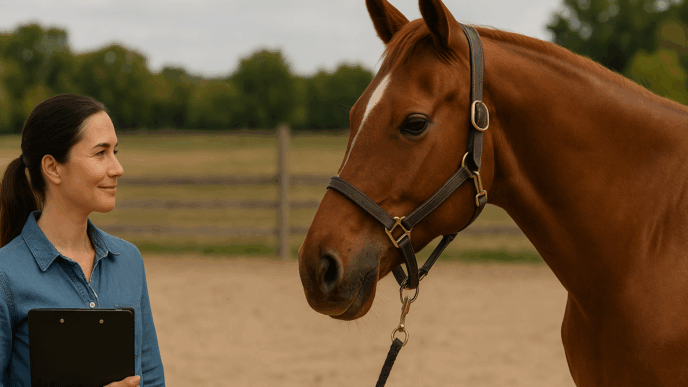
During practicums, clinicians work in teams. One clinician may lead the horse while another analyzes a treatment position or practice scenario from the side. This teamwork simulates the real environment, where a clinician, horse handler, and support staff collaborate to create an appropriate level of challenge.
Training also includes reasoning exercises. Clinicians are asked to consider when equine movement is not indicated for a participant, how to modify for fatigue or sensory overload, and how to differentiate preference from therapeutic need. The emphasis remains on thoughtful decision-making rather than rote protocols.
Equine Knowledge and Safety Fundamentals
Because the therapeutic tool is a living being, equine welfare is at the center of training. Clinicians learn how horses communicate stress, how movement patterns vary across individuals, and how to ensure that the horse’s physical and emotional well-being is prioritized. This includes rest, rotation, appropriate conditioning, and clear communication from all team members.
Training programs highlight how equine professionals and clinicians work together. A horse handler manages the horse’s attention, tempo, and line of travel while the clinician monitors participant alignment, arousal, engagement, and functional responses. Effective teamwork relies on a shared vocabulary and mutual respect, both of which are reinforced throughout training.
Documentation and Professional Scope
Because hippotherapy occurs within a licensed plan of care, clinicians are expected to document reasoning, treatment choices, and observed responses with clarity. Training covers:
- How to justify the use of equine movement in clinical terms
- How to track changes across sessions
- How to integrate barn-based work with broader therapy goals
Clinicians remain within the legal boundaries of their discipline. Hippotherapy training does not expand a clinician’s scope — instead, it provides a method they may use when clinically appropriate.
How Long It Takes to Develop Competence
Learning hippotherapy is not a weekend endeavor, even though some introductory courses take place over two or three days. Clinicians build competence through repeated exposure to horses, varied participant presentations, and ongoing mentorship.
Some clinicians integrate equine movement soon after completing Part I and Part II under supervision at a facility with established protocols. Others spend months observing sessions, refining handling skills, and practicing treatment setups before incorporating the strategy into direct care.
Progress depends on experience, comfort with movement analysis, access to horses, and the presence of knowledgeable mentors. Patience and repetition form the foundation of steady learning.
Deciding Whether Hippotherapy Training Is the Right Fit
Hippotherapy training may appeal to clinicians who enjoy complex motor and sensory reasoning, who value movement as a primary treatment tool, and who find meaning in partnering with animals. Because the work requires attention to multiple systems — rider, horse, environment — it suits clinicians who enjoy dynamic, multi-layered practice environments.
It is also a good fit for professionals who appreciate interprofessional collaboration. No one integrates equine movement alone. The work requires communication with horse handlers, barn staff, volunteers, and families.
Clinicians who prefer quiet, predictable environments may find barn-based practice less comfortable. Those who enjoy dynamic, whole-body problem-solving often thrive.
How to Begin Your Training Journey
A practical first step is visiting a center that offers clinical services incorporating equine movement. Observation helps clinicians understand the rhythm of sessions, the demands placed on horses, and the decisions clinicians make in real time.
From there, consider attending an AHA Part I course, followed by Part II when ready. Some clinicians take several months between courses so they can absorb foundational skills before advancing.
If certification interests you, review HCB prerequisites and consider whether you want to pursue credentialing once you gain experience.
Throughout this process, give yourself time. Competence develops through layering knowledge, not racing to the end.
Conclusion
Hippotherapy training teaches clinicians how to use equine movement purposefully, safely, and ethically within licensed practice. It expands the therapeutic environment, challenges clinical reasoning, and deepens understanding of movement in ways that benefit both clinicians and participants. Whether a clinician chooses to pursue certification or simply seeks to strengthen their practice, the pathway offers a rich blend of science, observation, and partnership with the horse.