SUMMARY
Hippotherapy is a clinical treatment strategy used by licensed physical, occupational, and speech-language therapists who incorporate horse movement into therapy sessions. It is not a riding lesson and not a stand-alone service. Instead, it is one part of an individualized treatment plan in which the horse’s movement becomes a therapeutic tool. This guide explains what hippotherapy is, how clinicians use it, what sessions look like, how safety and welfare are protected, and how families and care teams can evaluate programs in plain language.
What Hippotherapy Means in Clinical Practice
Hippotherapy refers to the way a credentialed clinician — a PT, OT, or SLP — intentionally uses a horse’s movement as part of a therapy session. The horse provides a unique movement pattern that cannot be replicated by standard clinic equipment.
When a horse walks, the pelvis produces a rhythmic, multidirectional pattern that resembles the motion of human gait. Sitting astride that movement requires ongoing postural adjustments and neuromotor responses that the therapist can shape through speed, patterns, and positioning.
Hippotherapy does not replace conventional therapy; it is one tool within a broader clinical plan. Therapists document goals the same way they would in a clinic, track progress, note responses, adjust tasks, and integrate recommendations into each participant’s wider care team. The setting may be a barn, but the work follows the structure of healthcare.
How Hippotherapy Differs from Other Equine-Assisted Approaches
Many programs include horses, yet not all are clinical. Hippotherapy is distinct because it is directed by licensed professionals who apply clinical reasoning, plan treatment, and measure outcomes.
Adaptive or therapeutic riding focuses on horsemanship instruction and participation rather than clinical change. Equine-assisted learning emphasizes life skills and teamwork. Equine-assisted psychotherapy is mental health work led by licensed psychotherapists. Hippotherapy sits in a different lane: it is a healthcare intervention with defined goals and measurable change.
Why the Horse’s Movement Matters
The core idea behind hippotherapy is that the horse’s walk provides a dynamic input to the human body. As the horse moves, the pelvis of the rider responds in multiple directions. This invites subtle trunk adjustments, active balance strategies, and ongoing neuromotor sequencing. For a clinician, these continuous adjustments offer a powerful way to support alignment, core engagement, timing, and body awareness.
When chosen carefully, the horse’s movement can help influence sensory integration. A smooth, predictable walk may help organize vestibular input. Grooming sequences or leading tasks can offer proprioceptive and tactile information in a structured, tolerable way. The barn environment also provides natural opportunities for graded sensory experiences: temperature changes, natural sounds, and manageable levels of stimulation that can be adjusted to the individual’s comfort.
How Clinicians Shape Therapeutic Input
The therapist directs the session, not the horse. That might mean choosing a horse with a specific stride, adjusting speed, riding circles or serpentines, or pausing for transitions. Sometimes the rider sits centered with hands free; other times they may face sideways or perform simple tasks within safe limits. Speech-language tasks might pair breath phrases with a steady walk. Occupational therapy sessions might integrate reaching, sequencing, or grasp and release while maintaining midline. Physical therapy sessions might emphasize core activation, controlled weight shifts, or more symmetrical alignment.
Each adjustment in tempo or direction creates a different form of sensory and motor input. Over time, therapists note how the rider responds and integrate those observations into treatment planning.
Who May Participate
Because hippotherapy is a treatment strategy, participation depends on whether the individual’s clinical goals align with the mechanisms of movement and sensory input. Some people come with neuromotor goals related to posture or balance. Others may be working on sequencing, sensory modulation, or breath support within speech tasks. Some individuals with developmental or neurological differences may respond well to the rhythmic nature of equine movement.
Therapists often collaborate with families, physicians, and educators to determine whether hippotherapy fits into the broader care plan. Decisions are made on a case-by-case basis, and participation may shift between mounted and unmounted work depending on goals and safety considerations.
What a Typical Session Looks Like
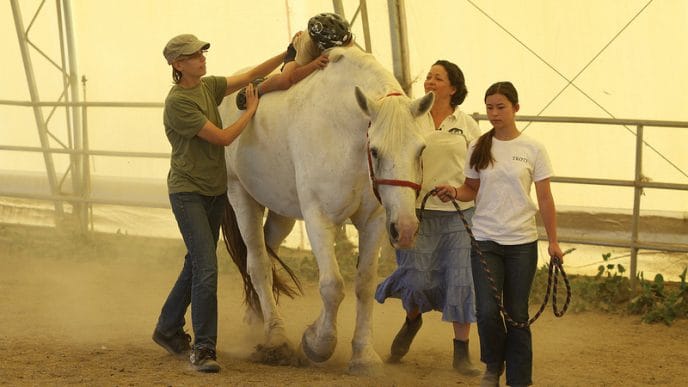
Although information varies across programs, most sessions follow a predictable rhythm. The therapist begins with a short check-in to review what has changed since the previous visit and to clarify the day’s focus. Helmet fit and equipment selection are addressed calmly and consistently. Mounting may occur via a block, ramp, or mechanical lift depending on access needs.
Once mounted or engaged in groundwork, the therapist shapes the activity moment by moment. The horse may walk straight lines at first, then move into gentle curves or changes of direction. Sometimes the therapist introduces stop-and-start transitions or short tasks such as reaching, tapping, voicing, or following a sequence. These activities serve the clinical goals rather than the riding experience.
As the session winds down, the tempo gradually slows and the therapist reinforces carryover. This might mean practicing the same posture on a bench, repeating a breath phrase off the horse, or reviewing one idea to focus on during the week. After dismounting, the session closes with a predictable routine that helps anchor the experience.
How Outcomes Are Evaluated
Because hippotherapy occurs within licensed practice, goals are clear and measurable. A clinician might track how long an individual can maintain neutral alignment, how well they shift weight during walking, or whether they can coordinate breath with speech under gentle postural demand. These changes may appear gradually in daily routines: smoother transitions at school, steadier sitting during meals, or clearer phrasing during conversation.
Documentation remains consistent with professional expectations. Therapists may use standardized measures, checklists, caregiver reports, videos, or comparison tasks to evaluate functional changes.
Safety and Welfare
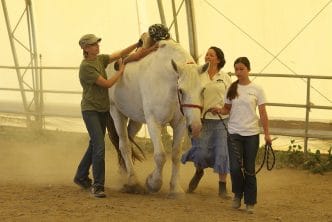
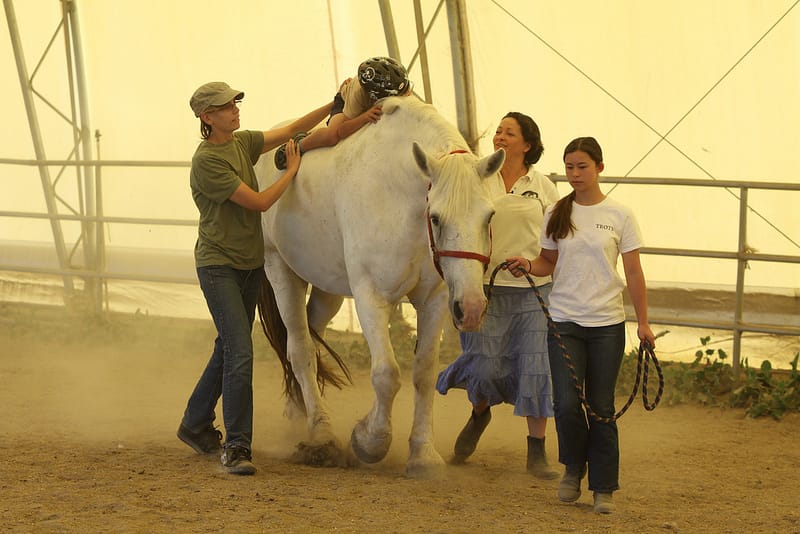
Safety and horse welfare are essential to quality practice. Programs maintain written policies for equipment, mounting procedures, volunteer training, and emergency planning. Helmets are required for mounted work. Sidewalkers or spotters are added when needed. Clinicians and equine specialists monitor both the participant and the horse throughout the session for signs of fatigue, discomfort, or stress.
Therapy horses are selected carefully for temperament, movement quality, and soundness. They are conditioned for the work, rotated appropriately, and given rest and choice. A horse that is comfortable and well supported offers clearer, safer movement.
Understanding Contraindications and Precautions
Because hippotherapy involves movement and weight bearing, screening is essential. Licensed therapists review medical history and discuss whether certain conditions require modifications or make mounted activity unsafe.
Some conditions involve precautions that limit intensity or duration, while others may be incompatible with mounted work. Programs routinely coordinate with healthcare providers to determine safe participation and to design alternative approaches when needed.
This information is educational only and not a substitute for medical advice. Suitability for hippotherapy must be determined by a licensed clinician.
Access and Fit
Hippotherapy may be offered weekly or biweekly depending on goals and availability. Some participants benefit from mounted work, while others use groundwork or therapeutic driving when that is safer or more appropriate. Insurance coverage varies widely, and programs can explain their billing practices and scholarship options.
The most important factor is fit — the right goals, the right team, and the right environment. When those elements align, hippotherapy can support meaningful change within a person’s daily life.
How to Identify a High-Quality Program
A strong program can clearly describe how hippotherapy fits within clinical practice, who leads sessions, how horses are selected, and how progress is tracked. Families should feel comfortable asking questions about credentials, safety procedures, equipment, horse welfare, and how the team collaborates with other providers. Transparency and steady, respectful pacing are signs of a well-run program.
A Short Illustrative Example
Imagine a child who tends to collapse to one side when sitting. A physical therapist selects a horse whose movement is even and steady. As the horse walks through gentle figure-eight patterns, the child practices growing tall through alternating sides of the trunk.
Over several weeks, these moments of controlled alignment begin to show up in daily life — sitting more symmetrically at meals, reaching with greater ease, and feeling steadier when stepping onto playground equipment. The changes are small but noticeable, and they accumulate through repeated, purposeful practice.
Conclusion
Hippotherapy brings clinical reasoning into the barn. The horse’s movement becomes a living surface that supports posture, timing, breath, coordination, and regulation in ways that static clinic equipment cannot mimic.
When guided by licensed clinicians who understand both human function and equine movement, these sessions become opportunities to rehearse skills that matter in everyday life. The benefits emerge one carefully shaped stride at a time.