SUMMARY
Adaptive equipment in equine-assisted programs includes helmets, ramps, saddles, pads, surcingles, stirrups, reins, supports, and communication tools. Used thoughtfully, this gear improves safety, comfort, and access for participants while protecting horse welfare and allowing skills to grow over time.
The most important “equipment” in any equine-assisted program is still a calm, well-trained horse and a thoughtful, skilled team. Adaptive gear comes afterward. It exists to make participation safer, more comfortable, and more effective for people with different bodies, movement patterns, and communication styles — without compromising the horse.
This guide walks through common types of adaptive equipment and how they fit into a typical program. It is educational only and not a substitute for professional, medical, or mental health advice.
How to Think About Adaptive Equipment
Good programs follow a simple principle: use the least amount of support needed for safety and participation, and reduce that support as skills develop. Adaptive equipment is not there to hold someone in place or “fix” their body. It should allow room to move, breathe, and communicate, while providing just enough structure for the task at hand.
Every strap, buckle, or support should be easy to check and quick to release. Fit matters for both the person and the horse. A saddle that looks secure but pinches the horse’s withers, or a helmet that wobbles and slides, creates problems rather than solving them. Staff continually adjust, observe, and refine, using the horse’s and rider’s comfort as guides.
Mounting and Dismounting: Blocks, Ramps, and Lifts
Getting on and off the horse is often where adaptive equipment is most visible. Many riders use mounting blocks or ramps so they can step across a shorter distance and place less strain on their joints and the horse’s back. Some centers also use mechanical or hydraulic lifts so participants who cannot step or stand on a block can still mount safely.
The mounting process is usually slow and predictable. Staff explain each step, check that everyone is ready, and move in a coordinated way. The horse is positioned carefully, held by an experienced leader, and given a moment to settle under the rider’s weight. Dismounting is approached with the same calm structure, often with a pause at the end of the ride so breath, heart rate, and attention can return to baseline before stepping down.
Helmets, Clothing, and Basic Safety
In most programs, a certified riding helmet is non-negotiable whenever someone is mounted. A good fit means the helmet sits level on the head, touches all the way around, and the chin strap is snug without digging. Staff may do a gentle “wiggle test” to confirm it does not slide forward or tip back.
Closed-toe shoes with a small heel help keep feet stable in the stirrups. Long pants prevent rubbing at the knee and inner thigh. Layers, including lightweight jackets or vests, allow riders to adapt to changing temperatures in the barn or outdoor arena. Gloves can be helpful for riders who grip tightly, have sensitive skin, or are using reins with special textures or markers.
These simple choices set the foundation for comfort before any specialized tack appears.
Saddles, Pads, and Surcingles
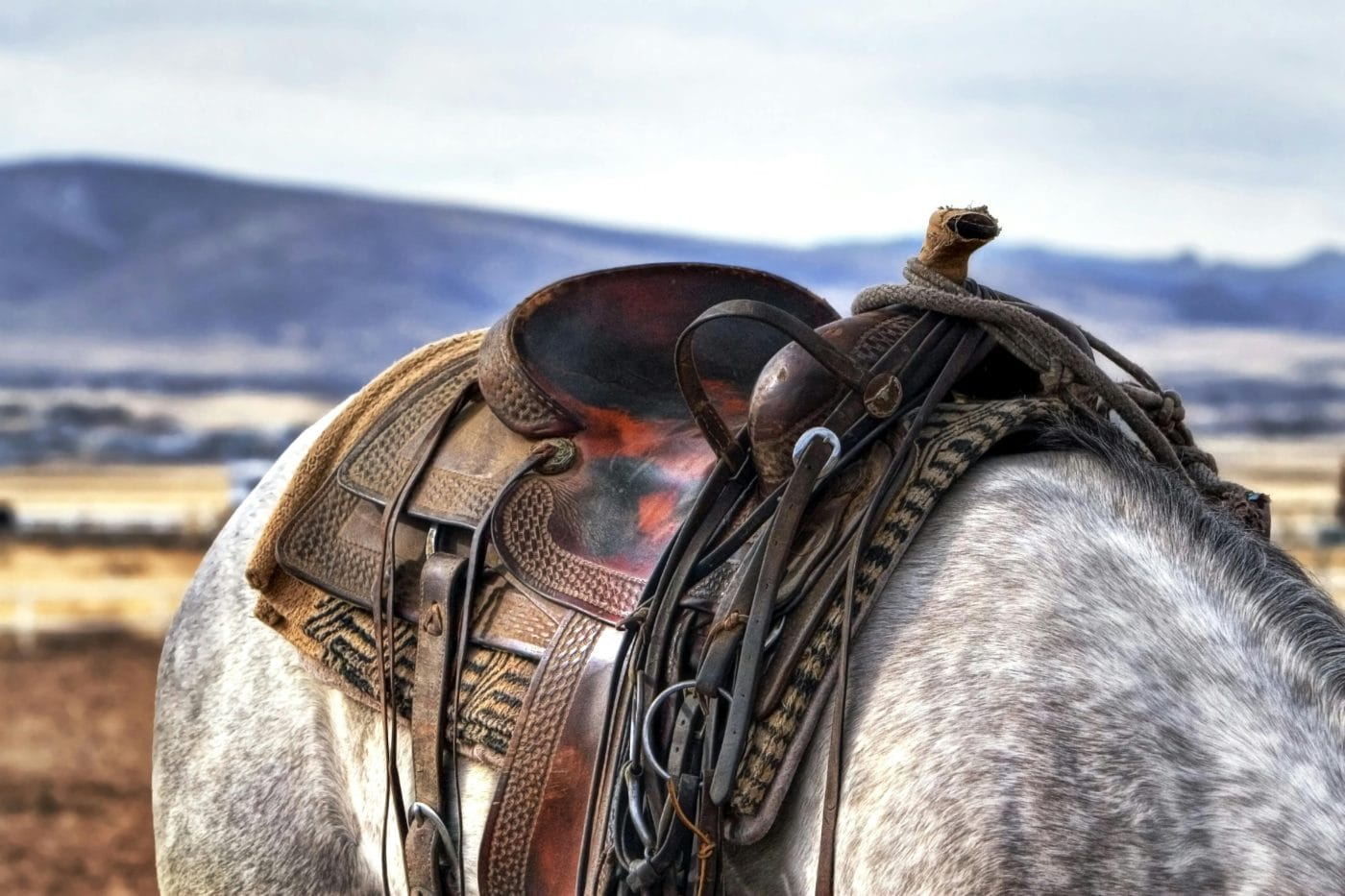
Saddles and pads are chosen to balance rider support with horse comfort. Many centers use a mix of English and western saddles. A western saddle offers a roomy, supportive seat and a horn that can be used for certain balance tasks. An English saddle allows closer feel of the horse’s movement and can be useful when fine-tuning alignment and posture.
Some programs use adaptive saddles with higher backs or extended pommels that offer temporary support for the trunk and pelvis while someone is learning to sit upright. These features should gently cue alignment, not lock the rider in place.
Under the saddle, therapy pads, foam liners, or sheepskin covers help distribute pressure and reduce friction on the horse’s back. When the goal is maximum feel of the horse’s movement, therapists may use a broad pad with a surcingle — a wide band that goes around the horse’s barrel with built-in handholds. The surcingle allows flexible positioning, such as side-sitting or forward lean, while still giving the rider a centered place to rest their hands.
One safety point is consistent across high-quality programs: riders are not strapped to the horse. Belts, ties, or devices that prevent quick dismount in an emergency are avoided. The goal is safe support, not restraint.
Stirrups and Foot Support
Foot position has a quiet but powerful influence on balance, hip comfort, and confidence. Adaptive options here are often small but significant. Safety stirrups are designed so the foot can release quickly if a rider loses balance. Caged or tapadero stirrups have a covered front that helps prevent the foot from sliding too far through.
Some stirrups include wider treads, offset designs, or flexible joints to reduce pressure on knees and hips. Toe stoppers can give riders a dependable “end point” that keeps the foot from pushing too far forward. Riders with limited ankle motion or muscle tone may benefit from these supports as they build more independent control.
Many participants start without stirrups at all, focusing first on trunk alignment and pelvic movement. Stirrups can be added later when balance improves and when they truly support, rather than distract from, the work.
Reins, Handholds, and Grip Aids
Hands tell you a lot about how a rider is feeling and how much effort they are using. Adaptive reins and handholds are chosen to match grip strength, coordination, and communication goals.
Simple handholds, such as a grab strap on the front of the saddle or a handle on a surcingle, offer a secure place for a light hold. Loop or ladder reins provide several fixed hand positions, helping riders find even contact on both sides. Some reins are color-banded (“hold the blue sections”) to make instructions more concrete.
Foam covers or textured sleeves on reins can reduce the effort needed to maintain contact. Elastic inserts soften abrupt pulls and make the feel more forgiving for both horse and rider. When working from the ground, the primary lead rope usually stays with the experienced horse leader. The participant may use a secondary lead to practice cues in a way that is safe for everyone.
Trunk and Pelvic Supports
Some riders need an extra nudge toward center, especially early on. Programs may use small blocks, wedges, or bolsters in front of or beside the rider’s pelvis to encourage alignment. Higher cantles or temporary back panels can offer gentle contact behind the seat, signaling where “tall and centered” lives.
In some clinical contexts, riders might briefly use side-sitting or prone positions on a wide pad to wake up different muscle groups and change how the body receives the horse’s movement. These choices are made carefully, with safety and comfort monitored continuously.
As a general rule, if a support starts doing the work instead of just pointing the body in the right direction, it is time to step it down.
Communication and Sensory Tools
Not all adaptations are physical. Communication and sensory tools help riders understand what is being asked and stay within a workable arousal range.
Visual supports might include cones, colored rings, or arena letters that mark where to turn, stop, or change activity. Simple picture cards or a short written sequence can outline the steps of grooming or mounting. For some participants, consistent verbal cues or rhythmic counting help organize breath and timing.
Textured pads, reins, or grab straps can provide steady tactile feedback without scratching or irritating skin. In certain settings, speech devices or switches may be used from the ground during equine-assisted learning or psychotherapy sessions. When equipment like this is present, staff take extra care to manage cords, hard edges, and proximity to the horse’s body.
Equipment for Ground-Based Programs
Equine-assisted learning and equine-facilitated psychotherapy often stay on the ground. Adaptive “equipment” here is largely about layout and boundaries. Halters and long lead ropes allow clear communication, while cones, poles, or simple obstacles create task structure.
Facilitators plan traffic flow so there is enough space between horses and participants, and so anyone can step out to a “safe zone” if they need a break. Sturdy, closed-toe shoes and gloves protect feet and hands during leading exercises. The overall aim is a setting that feels contained, predictable, and respectful of both human and horse comfort.
Driving and Alternatives to Riding
Mounted work is not always the best or safest option. Some participants are better served by carriage driving, where they sit in a cart and direct the horse with reins and voice. Adaptive seats, lap belts designed for the vehicle, and carefully fitted harnesses keep both person and horse secure while still allowing freedom of movement.
Driving delivers rhythmic movement through space and meaningful responsibility without the pelvic motion of riding. For others, entirely unmounted programs offer rich experiences through grooming, leading, and observation alone. Adaptive equipment for these programs may be as simple as easier-to-hold brushes, step-free access to grooming areas, or well-placed benches for rest.
Fit Principles That Protect Horses and People
Every piece of equipment touches two beings: the participant and the horse. Programs pay close attention to both. On the human side, staff look for red marks or rubbing after a session and adjust clothing, padding, or time as needed. On the horse side, they watch for soreness at the withers or back, uneven sweat marks, skin irritation under girths, and changes in movement.
Session length and rider weight are matched to the horse’s fitness and conformation. Saddles are checked for spine clearance and even contact. Pads are kept clean and replaced when worn. Buckles, stitching, and straps are inspected regularly, with tired gear retired before it becomes a problem.
What You Should See in a Good Setup
From the sidelines, a well-run program looks calm and methodical. Preparation is unrushed. Helmets are adjusted gently, not shoved into place. Stirrups are set thoughtfully rather than guessed. The horse stands quietly, with soft eyes and a relaxed posture, and is given a moment to adjust to any new tack or positioning.
Staff explain what they are doing in simple language and invite questions. During the first few minutes of movement, they watch closely: does the rider look comfortable, can they breathe and move freely, and does the horse continue to step forward with ease? Small tweaks are made on the spot when needed.
How Adaptive Equipment Fades Over Time
One quiet sign of progress in equine-assisted programs is the gradual fading of equipment. A rider might begin with a high-backed saddle, a grab strap, and loop reins. Months later, they may be in a flatter saddle with standard reins and only occasional use of a handhold. A caged stirrup might transition to a simpler safety stirrup. Extra trunk supports may be reduced or removed as balance improves.
The goal is never to rush away from support, but to follow the rider’s readiness. As independence grows, the horse’s comfort stays just as central as the person’s. The best adaptive equipment always points toward more freedom and choice for both partners — and a shared experience that remains calm, respectful, and enjoyable.