Who It Helps
Equine Therapy for Veterans: Benefits, Programs, and How to Find One
For many veterans, the barn asks nothing about rank or the past — just your attention, right now. Here's how equine programs for veterans actually work, and how to find one.
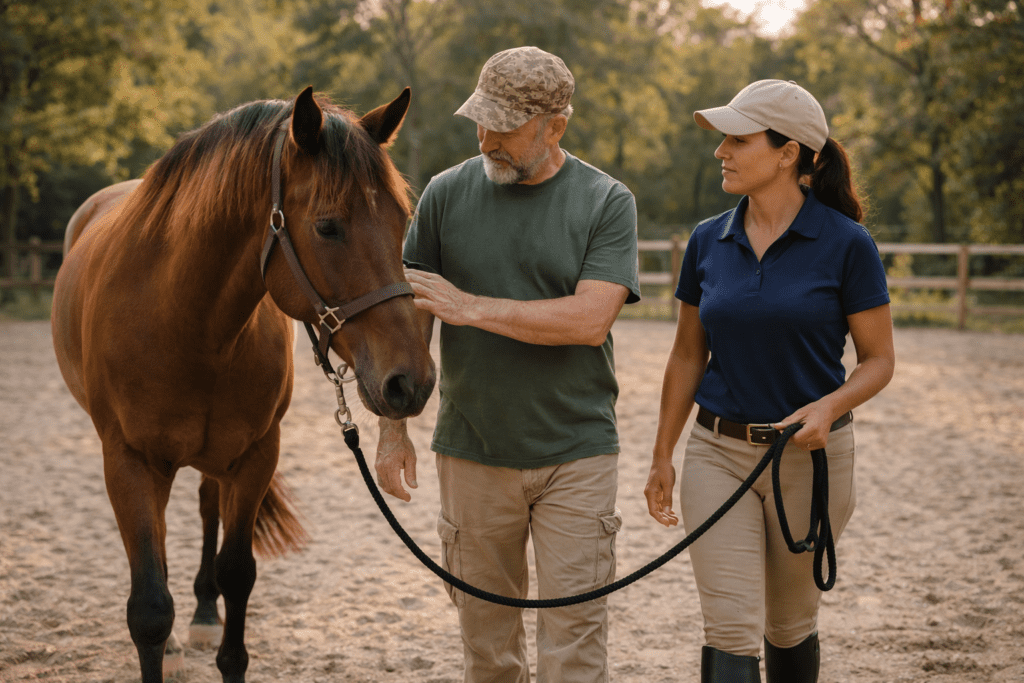
Equine therapy for veterans refers to structured, horse-based programs — from groundwork and horsemanship to optional riding — that many veterans describe as grounding, steady, and meaningful. Most are built around connection, routine, and shared experience rather than clinical treatment, though some are led by licensed professionals.
Because the formats vary widely, the useful first step is understanding what a program actually offers and how it fits what you’re looking for.
Why Veterans Explore Equine Programs
Many equine centers across the United States and Canada have built programs specifically with veterans in mind, and they tend to feel different from both military settings and traditional support spaces. The most common thing veterans mention is the pace. The barn rewards slower, more deliberate attention, and a horse responds to small shifts in movement and intention — so the setting is about presence rather than pressure.
There’s no hierarchy in it, either. A horse doesn’t respond to rank, background, or anything that happened before today; it responds to what you do in the moment. For a lot of veterans, that opens up a different kind of engagement than they find elsewhere. If you’re new to the field altogether, our overview of what equine therapy is is a good place to get oriented before comparing veteran-specific programs.
Types of Equine Programs for Veterans
Programs vary widely, but a few formats show up again and again across veteran-focused initiatives. Most centers blend several of these rather than offering just one, so it’s worth asking how a given program combines them.
Horsemanship and Groundwork
Many programs start on the ground, with grooming, leading, reading horse behavior, and simple barn tasks. It’s a structured, approachable entry point that asks nothing in the way of riding skill, and for plenty of participants the groundwork stays the most rewarding part.
Group-Based Equine Activities
Some programs are designed for veteran groups and lean on teamwork — shared tasks, coordinated exercises, and activities that put communication and collaboration at the center. The shared experience with other veterans is often as much the point as the work with the horse.
Adaptive Riding and Mounted Activities
Where riding is offered, it’s usually optional and introduced at a pace that matches each participant’s comfort and experience. This overlaps with therapeutic riding, which is taught by certified instructors in a structured setting.
Equine-Assisted Learning and Outdoor Experiences
Some programs draw on equine-assisted learning, which focuses on communication, problem-solving, and self-regulation through guided, ground-based activity. Others build in trail walks, outdoor horsemanship days, or multi-day immersive experiences that combine time with horses, physical activity, and group connection.
What a Typical Session Looks Like
Most programs follow a consistent structure so participants always know what’s coming, which is part of what makes the barn feel manageable.
A session usually opens with arrival and a short overview, then some grooming or quiet observation to help everyone settle in and focus. The main activity might be groundwork, leading exercises, a group task, or riding, depending on the program — and it’s typically clear, structured, and adaptable.
A participant might lead a horse through a simple arena pattern, where small adjustments like slowing down or relaxing their posture visibly change how the horse responds; those moments tend to become the heart of the experience. Many sessions end with a brief, unhurried closing routine, and some include a moment of reflection, though not in a clinical sense.
Benefits Veterans Often Describe
Equine programs aren’t clinical treatment unless they’re staffed by licensed providers, so these are best understood as commonly reported experiences rather than guaranteed outcomes. With that framing, the descriptions veterans give are remarkably consistent.
Many talk about a renewed sense of purpose through hands-on responsibility, and the value of a steady, predictable routine. Others point to the calm focus the work demands, the clear and immediate feedback that comes from a horse, and a kind of connection that carries no hierarchy or expectation.
For many, the community and shared experience with other veterans matters as much as anything that happens with the horse. How much of this any one person experiences varies, but the throughline — steadiness, presence, and connection — comes up again and again.
A Complement to Professional Care
Equine programs can sit alongside professional care, but they aren’t a substitute for it. For veterans managing PTSD, anxiety, depression, or other health concerns, these programs are best thought of as a complement to treatment and support from qualified providers — not a replacement. This article is informational and isn’t medical advice.
If you or a veteran you care about is in crisis, the Veterans Crisis Line offers free, confidential support 24/7:
- Dial 988 then Press 1, text 838255, or;
- Chat at VeteransCrisisLine.net.
You don’t need to be enrolled in VA benefits or health care to reach out.
Who These Programs Are For
Equine programs for veterans are usually designed to be accessible regardless of any prior experience with horses, and most ask for none at all.
They tend to fit veterans who are adjusting to civilian life and want structured activity, who prefer hands-on and practical settings over conventional ones, who are looking to build routine, or who simply want a community-based program alongside other veterans. Because programs adapt to the individual, the better question is usually which format and pace fit you — and the fastest way to answer that is to talk with a few programs directly. You can find equine therapy centers near you and ask how they work with veterans.
What to Expect Before Your First Visit
For a lot of veterans, the hardest part is simply showing up the first time, and knowing what to expect takes some of the unknown out of it.
Most programs require no prior horse experience, and staff and volunteers guide participants through every part of a session — our guide to who does what in equine-assisted programs explains the roles you’ll encounter. Expect a brief introduction to the space and the people, clear instructions before each activity, hands-on support when you’re working with the horse, and a pace that lets you get comfortable.
Closed-toe shoes and comfortable clothing are usually recommended, and any program will explain additional requirements ahead of time. If it helps to picture the flow in more detail, what to expect at a riding session walks through it step by step.
How to Find an Equine Program for Veterans
Finding the right program comes down to knowing where to look and what to ask. Many nonprofit equestrian centers run veteran-specific sessions or fold veterans into their broader programming, and those connected to local veteran networks are often easier to access.
You can browse centers by state in our equine therapy directory, or use the Find a Center Near You tool to see programs close to your location. When you reach out, it helps to ask whether they offer veteran-specific programming, whether sessions are group-based or individual, whether riding is optional, how sessions are structured, and whether they partner with veteran organizations or community groups.
Frequently Asked Questions
A few questions come up often from veterans looking into equine programs for the first time. Here are brief, honest answers.
Is Equine Therapy for Veterans Covered by the VA?
It depends. Some VA facilities and community partners offer or refer veterans to equine-assisted programs, but coverage and availability vary by location and by the type of program. The most reliable approach is to ask both the program and your VA provider what’s available to you.
Do I Need Any Experience with Horses?
No. The large majority of veteran programs are built for people with no horse experience at all, and staff and volunteers guide you through each step. Sessions for newcomers usually start slowly, often on the ground.
Are These Programs Group or Individual?
Both exist. Some programs are designed around veteran groups and shared activities, while others work one-on-one. Many centers offer a mix, so it’s worth asking which format a program uses and which would suit you better.
Is Riding Required?
Not always. Riding is often optional, and many veterans get the most out of groundwork and horsemanship done entirely from the ground. A good program will explain what it offers and help you decide what makes sense.