

SUMMARY
Many barns offer equine-assisted programs designed to include children with disabilities in hands-on, structured activities with horses. These programs focus on clear routines, accessible participation, and supportive environments that help children engage at a comfortable pace.
Equine-assisted programs vary widely. Some focus on adaptive riding lessons, while others introduce groundwork, horsemanship, and barn routines. This overview explains how these programs are typically organized, what kinds of activities children may encounter, and how barns structure sessions to create an inviting, predictable experience.
What Equine-Assisted Programs Look Like
“Equine-assisted programs” is an umbrella term for a variety of horse-centered activities that support participation, learning, and engagement. Depending on the center, programs may include:
Adaptive Riding
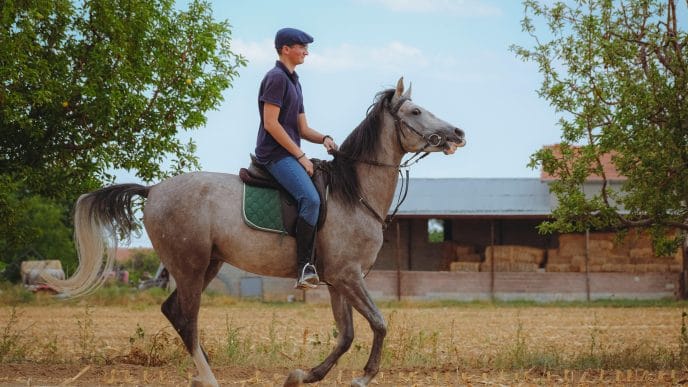
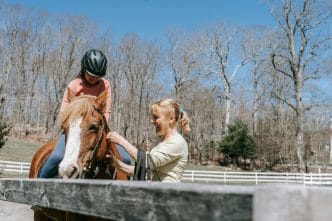
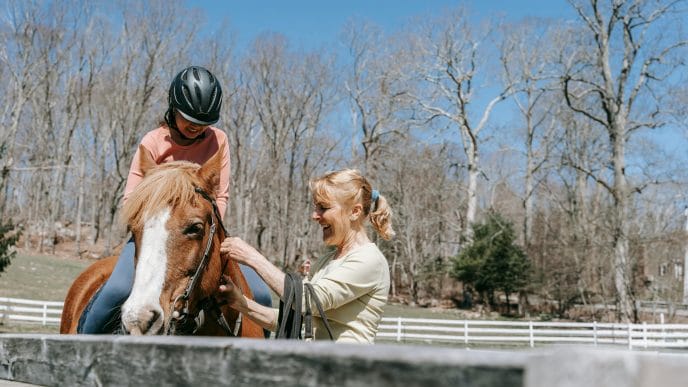
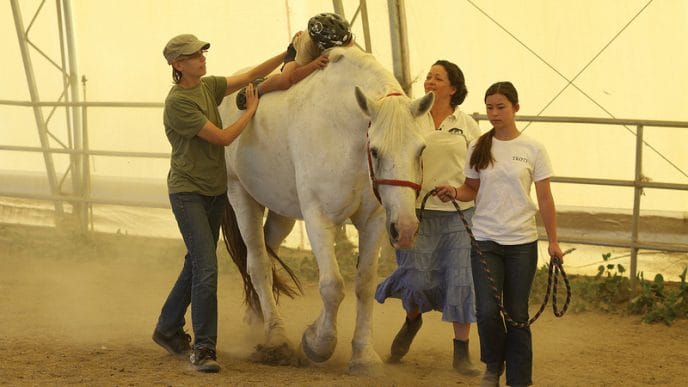
Instructional riding lessons with adaptations that help children participate safely and comfortably. Lessons may introduce simple patterns, steering, transitions, or mounted routines paced to the rider’s comfort.
Groundwork and Horsemanship
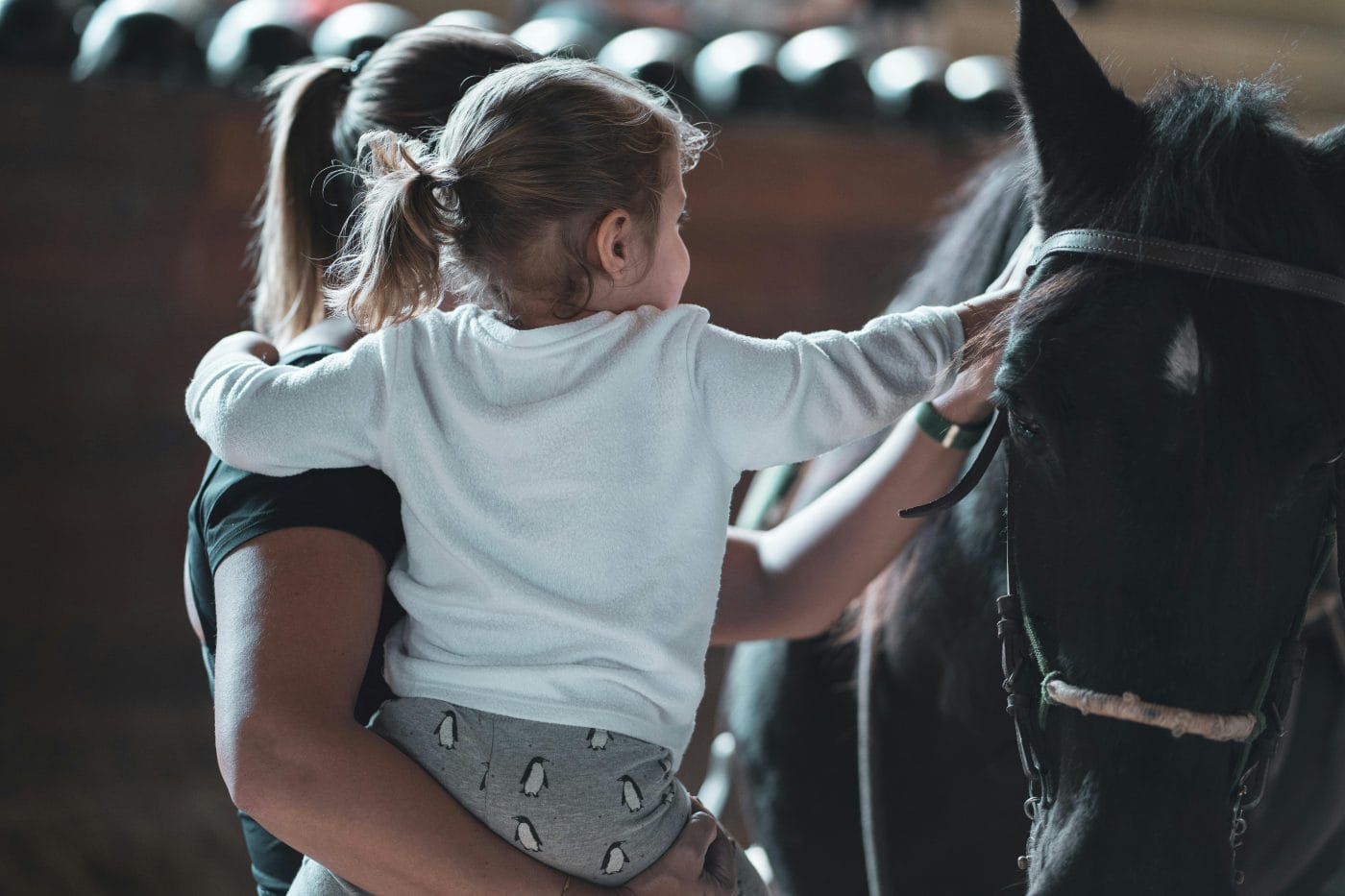
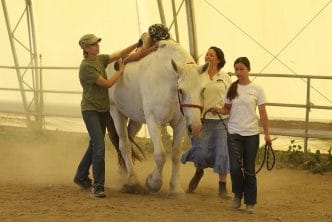
Children may groom a horse, lead through a designated path, observe behavior, or assist with simple, supervised barn tasks. These activities allow for hands-on involvement without needing to ride.
Group or Community Programs
Some barns offer small-group experiences, school visits, seasonal activities, or themed horsemanship sessions. These programs emphasize inclusion, consistency, and shared routines.
Each center chooses its own structure and terminology, but most aim to create clear expectations and a welcoming entry point for children who are new to horses.
How Programs Support Participation
Equine centers that serve children with disabilities often rely on routines that help reduce uncertainty. Predictability is a core feature of many sessions. For example:
- Children may begin by greeting a horse, brushing in a familiar sequence, or reviewing a simple picture schedule.
- Activities are usually broken into steps with clear starts and stops.
- Language may be kept concise and repeatable so children learn the pattern over time.
- Mounted lessons may use slow, steady pacing, familiar figures, and consistent cues.
These elements help children ease into the environment and understand how each part of the session fits together.
Movement and Hands-On Involvement
Much of the experience comes from doing. Whether mounted or on the ground, children interact with horses through purposeful actions such as:
- brushing in a set order
- leading along a rail or through cones
- walking circles or straight lines in a guided lesson
- observing how the horse responds to their body language
- completing small barn tasks with staff support
Programs are designed so each step is easy to follow and builds naturally from the one before it.
Community and Roles at the Barn
Barns often operate as small communities where instructors, volunteers, families, and children share space and routines. This sense of community shows up in:
- predictable greetings
- turn-taking during group activities
- simple responsibilities such as handing over a brush or returning equipment
- closing rituals that mark the end of the session
These elements help children settle into the rhythm of barn life and recognize their role within it.
A Typical Session
While every center has its own format, many sessions follow a familiar flow:
Arrival
A short welcome, a review of the session steps, and a chance to meet or reconnect with the horse.
Main Activity
Mounted or unmounted tasks depending on the program. Examples include steering around markers, walking a horse through a pattern, or grooming with guidance.
Wrap-Up
A closing routine such as thanking helpers, brushing the horse one last time, or naming something they enjoyed that day.
This simple arc keeps the session steady and easy to anticipate.
A Small Scene
A child walks beside a small horse, holding the lead rope with a volunteer. They pause at each cone in a simple sequence. With a gentle gesture practiced earlier, the child signals the horse to continue. The sequence repeats—walk, pause, gesture, walk—giving the session shape and a sense of completion.
How Centers Communicate With Families
Many programs stay in regular contact with families to help ensure comfort and clarity. This may include sharing session steps, offering visual supports, or asking what routines work well at home or school. Communication helps create continuity between the barn and the child’s daily environment.
Where These Programs Fit in the Larger Landscape
Equine-assisted programs for children with disabilities sit alongside a broad range of horse-related activities across the country. Some centers focus exclusively on adaptive riding, some emphasize horsemanship and groundwork, and others run seasonal camps or small-group experiences. Each barn shapes its offerings around staff training, horses, facility features, and community needs.
Conclusion
Equine-assisted programs for children with disabilities create steady, hands-on experiences in a calm and supportive setting. Through simple routines and guided involvement with horses, children have opportunities to participate, explore, and engage at a pace that feels manageable. The barn environment — structured, welcoming, and grounded in clear steps — gives these programs their distinctive character.


hi,
I am wanting to get my son into your program he has several disorders and the counselor has recommend that we see can do this help him along whith his counseling. he has ADHA, PTSD, delayed speech issues, RAD, selective mutisium.
please let know how I can get him in
thanks amber hartwick